KNCC

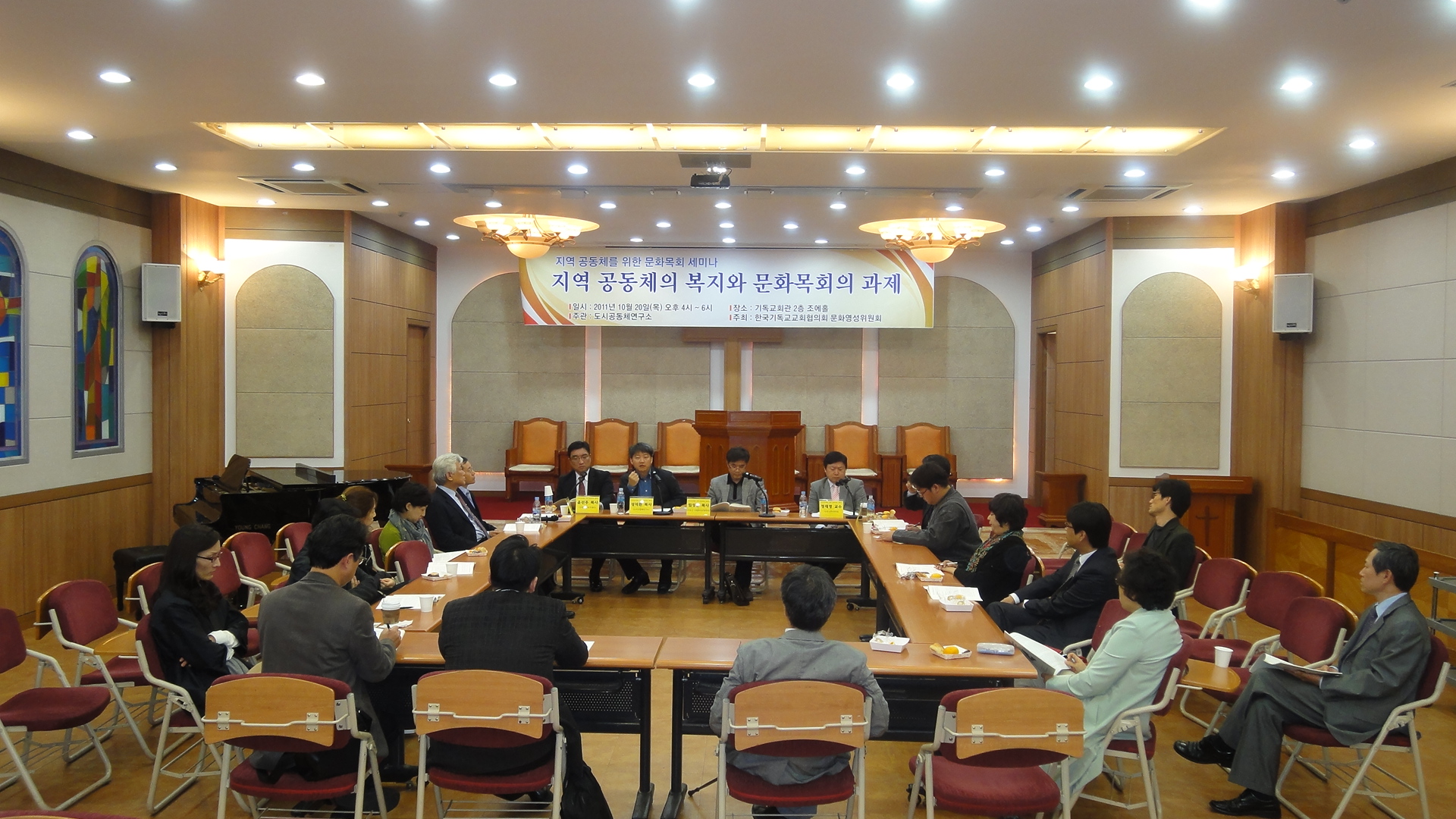
- 지역 공동체의 복지와 문화 목회의 과제
- 한국기독교교회협의회(이하 교회협) 문화영성위원회는 지난 10월 20일, 기독교회관 2층 강당에서 "지역 공동체의 복지와 문화 목회의 과제"를 주제로 문화 목회 세미나를 열었다. 이날 세미나는 지역 사회와 호흡하는 지역 공동체 문화 목회의 계기를 마련하기 위한 것으로 정재영 교수(실천신학대학원)가 사회를 맡아, 임성규 목사(서울시 사회복지사협회장)와 성석환 목사(교회협 문화영성위원회, 도시공동체연구소장)가 각각 "한국사회의 복지 논쟁과 교회의 역할", "지역공동체 형성을 위한 문화복지 실천"을 주제로 발제를 진행했다. 임성규 목사는 발제에서, 교회의 사회복지 참여의 중요성을 강조하는 한편 교회의 사회복지 참여가 가칫 교세 성장을 위한 수단으로 비춰질 때 교회는 진정성을 잃고 사회적 신뢰도는 더욱 추락할 위험이 있다고 지적했다. 그는 교회의 사회복지 참여에 대해 교회 성장의 대안이 아닌 교회 본질의 회복이라 강조하고, 한국교회가 올바른 사회복지 참여를 위해 관련 분야에 대한 연구개발은 물론 정보와 전문성을 획득하여 교회의 기능을 강화하고 사회적 공신력을 회복하는 기회로 삼아야 할 것이라 주장했다. 성석환 목사는 교회가 지역사회의 일원이 되어 지역의 발전과 변화를 이끌어 내는 일에 동참해야 하며, 이와 같은 문화복지를 통한 지역선교는 인간의 삶을 풍요롭게 하는 것을 넘어 하나님의 공의로운 통치가 온 세상에 이루어지도록 하는 일이라 강조했다. 발제 후 이어진 패널 토론에서 지역공동체를 를 문화목회는 먼저 교회의 역할과 책임 등을 명확히 정해야 하며 특히 현장을 고려한 연구 내용이 필요하고 더불어 그 내용을 교육하는 프로그램도 필요하다는 의견 등이 있었다. 교회협 문화영성위원회는 이번 세미나를 포함하여 앞으로 3~4차례 사례발표를 중심으로 세미나를 진행할 예정이며 그 내용을 바탕으로 교회현장에서의 문화목회를 돕는 <문화목회 가이드북>을 제작할 예정이다. 자료집 다운로드 : 한국기독교교회협의회 문서자료실(클릭하시면 해당 페이지로 이동합니다.)
2011-10-24 02:58:44
2011-10-19 04:56:31
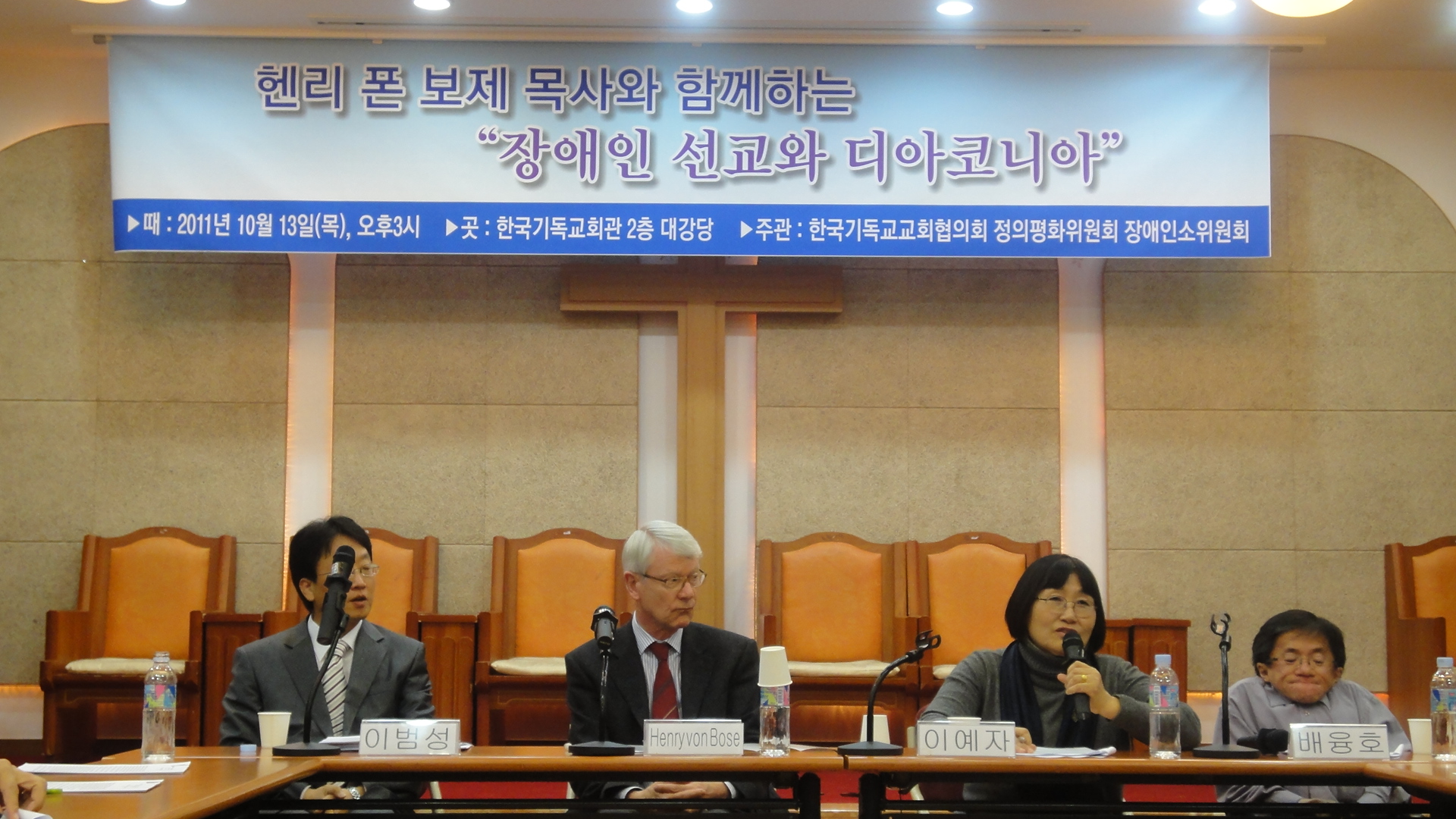
- 헨리 폰 보제 목사와 함께하는 장애인신학 토론회
- 한국기독교교회협의회 정의평화위원회 장애인소위원회는 지난 10월 13일(목) 오후 3시, 기독교회관 2층 조에홀에서 헨리 폰 보제 목사(前 뷔텐베르크 주 디아코니아부 부총재, 現 뷔텐베르크 주 의원)를 모시고 장애인신학 토론회를 열었다. 이날 토론회는 이범성 목사(장애인소위원회 위원, 실천신학대학원 교수)가 사회를 맡아, 헨리 폰 보제 목사가 "유엔장애인권리협약에 대한 독일교회의 입장"을 주제로 강연을, 배융호 목사(장애물없는생활시민연대 사무총장)가 "유엔장애인권리협약과 한국교히"를 주제로 지정토론을 진행했다. 이날 폰 보제 목사는 장애를 사회구조적인 문제로 설명하며 이를 극복하기 위해서 독일교회의 예를 들어 교회가 정부를 감시하고 상기시키는 역할을 감당해야 한다고 주장했다. 그는 장애인의 참여는 자선이나 선행이 아니라 그들의 권리를 인정하는데서부터 시작되며 이것이야말로 기독교의 핵심인 "성공, 권력 그리고 완벽에 대한 비평"과 "약함, 불편함 그리고 상처에 대한 종중"이라 강조했다. 이에 대해 배융호 목사는 한국교회 안에서 장애인 차별이 심각한 수준이며 장애인권리협약 비준 사실조차도 알지 못하는 교회가 많다고 지적하고, 이제라도 한국교회가 장애인차별금지법과 장애인권리협약에 대해 관심을 가지고 두개의 국내외법에 따라 장애인에 대한 차별을 막고 나아가 장애인 권리를 보장하기 위해 노력해야 한다고 강조했다. 교회협 장애인소위원회는 이번 토론회의 논의를 바탕으로 장애인권리협약 이행과 장애인차별금지법 시행, 그로 인한 장애인 권리의 개선이 이루어질 수 있도록 하는데 교회의 역할을 찾아 최선의 노력을 다할 것이다. 자료집 다운로드 : 교회협 홈페이지 문서자료실(클릭하면 해당 페이지로 이동합니다.)
2011-10-19 04:00:41
- 원전 관련 토론회 『원전 없는 사회를 향한 교회의 역할』 안내
- 원자력 에너지는 1970년대 석유파동 이후 안정적인 전력 공급, 경제성 등을 이유로 화석 연료의 대체에너지로써 각광받아 왔으며 국내에서 1978년 4월 고리원자력발전소 1호기를 시작으로 현재 부산 5기, 영광 6기, 경주 4기, 울산 6기 등 총 21기가 가동 중에 있습니다. 이명박 정부는 출범 첫 해(2008년), 「국가 에너지 기본계획」을 통해 2030년까지 원자력 발전량을 36%에서 59%로 올릴 것이라 발표했습니다. 세계원자력협회(WNA)와 한국수력원자력 자료에 따르면, 제5차 전력 수급 기본 계획이 끝나는 2024년 한국의 단위면적(1㎢)당 원전 설비용량은 365㎾로 치솟아 프랑스(103㎾)의 3.5배, 일본(177㎾)의 2배로 벨기에(195㎾)도 크게 앞지르게 됩니다. 밀집도가 높아짐에 따라 대규모 방사성 물질 유출 사고 때 직접적인 피해를 보는 주민도 370만명에 이를 것으로 추산됩니다. 세계 각국은 일본의 후쿠시마 원전 사고 이후 원전 정책을 전면 재검토하겠다고 잇따라 발표했습니다. 일본은 총 54기 가운데 36기의 원전 가동을 중지했고, 독일은 2020년까지 모든 원전 가동을 중단하기로 결정했으며, 유럽과 미국 등 대부분의 나라는 원전이 아닌 새로운 에너지 개발을 준비하고 있습니다. 그러나 한국 정부는 원전 정책을 종전 그대로 이어갈 방침이며, 노후 되어 사고 위험이 높은 원전도 별다른 조치 없이 수명 연장을 허락해주고, 신설에도 박차를 가하고 있습니다. 한국기독교교회협의회(NCCK, 이하 교회협) 생명윤리위원회는 지난 3월에 있었던 일본 후쿠시마 원전 사고를 돌아보며 우리 정부의 전력 정책에 대한 이해와 문제점을 인식하고 대안적 에너지 미래를 위한 교회의 역할을 모색하고자 아래와 같이 토론회를 엽니다. 이번 토론회를 통해 정부 전력 정책에 대한 개괄적인 이해 및 문제점을 인식하고 민주적인 과정을 통해 국민과 함께 논의될 수 있는 방향을 살펴보는 한편 지속가능한 에너지 체계가 무엇인지 그리고 과도한 에너지 소비를 줄이기 위한 필요한 것은 무엇인지 알아보고자 합니다. 전 세계가 탈원전을 향한 계획과 실천 방안을 확보하고자 노력하는 이 때, 한국 교회도 여러 단위와 함께 원전 없는 사회를 위한 일에 적극 참여하고자 하오니 많은 관심과 참석을 부탁드립니다.
- 원전 관련 토론회 <원전 없는 사회를 위한 교회의 역할>
- 본회 생명윤리위원회는 지난 10월 6일(목) 오후 3시, 기독교회관 2층 조에홀에서 <원전 없는 사회를 위한 교회의 역할>을 주제로 토론회를 열었습니다. 후쿠시마 원전 사고 이후 세계 각국이 원전 관련 정책을 전면 재검토하겠다고 나섰지만 한국 정부는 원전 신설에 박차를 가하고 있으며 노후되어 사고 위험이 높은 원전까지도 별다른 조치없이 수명을 연장해 주는 등, 종전의 정책을 그대로 이어갈 방침이라 밝혔습니다. 이에 본회는 한국 정부의 전력 정책의 문제점을 인식하는 한편 지속가능한 에너지 체계와 에너지 과소비를 줄이기 위한 교회의 역할을 살펴보는데 이번 토론회의 의의를 두었습니다. 토론회는 유근숙 목사(교회협 생명윤리위원회, 기장 생태운동본부) 기도로 시작되었으며 양재성 목사(교회협 생명윤리위원회, 기독교환경운동연대) 사회로, 안병옥 소장(기후변화행동연구소)과 김혜정 위원장(환경운동연합 일본원전비상대책위원회)이 각각 "체르노빌과 후쿠시마 이후 세계 원전 정책의 변화"와 "한국 원전 정책의 문제점과 대안"을 주제로 발제하였습니다. 안병옥 소장은 후쿠시마 원전 사고 이전부터 이미 세계 에너지 시장에서 원자력은 퇴조하는 흐름을 보이고 있었다며 미래는 재상 가능 에너지의 것이라고 주장하였습니다. 그는 일부 국가 전문가들의 의견을 들어 원자력 에너지가 이미 경제성을 상실했다고 지적했습니다. 우리 나라의 경우 원자로 폐기와 핵 폐기장 건설 비용 및 손해배상 책임보험료가 턱 없이 낮게 책정되었는데 이를 현실화 하면 원전의 발전 단가는 지금과 비교할 수 없을만큼 증가하게 될 것이고, 또한 전량 수입에 의존하고 있는 원자력 발전의 연료인 우라늄은 가채 연한이 40-60년 밖에 남지 않았고 이 때문에 이미 10여년 사이 가격이 무려 10배 이상 상승했다고 밝혔습니다. 김혜정 위원장도 미국과 일본, 구소련에서 일어난 최악의 핵 사고를 예로 들며 원자력 발전소는 본질적으로 안전하지 않음에도 불구하고 한국의 원자력 산업계는 사고가 날 수 있다는 사실 자체를 인정하고 있지 않다며 원전 관련 대비책이 미비함을 지적했습니다. 두 발제자는 모두 원전 없는 사회를 만들기 위해 필요한 것으로 ① 탈원전 시나리오와 ② 에너지 효율성을 높이는 정책이 필요하고 이와 더불어 ③ 핵 없는 세상이 가능하다고 믿는 시민들의 힘이 결집되어야 한다고 강조했습니다. 본회는 한국 정부가 탈원전을 향한 현실적인 계획과 실천 방안을 확보할 수 있도록 기독인들의 의지와 참여를 이끌어내고자 합니다. 많은 관심과 기도, 그리고 동참을 부탁드립니다. 자료집 다운로드 : 교회협 홈페이지 문서자료실(← 클릭하면 해당 페이지로 이동합니다.)
- Final Statement of the 3rd Asia Inter-religious Conference on Article 9
- Final Statement of the 3rd Asia Inter‐religious Conference on Article 9 From Seoul to Okinawa October 7, 2011 Okinawa Christian University Article 9 of Japan’s Peace Constitution Aspiring sincerely to an international peace based on justice and order, the Japanese people forever renounce war as a sovereign right of the nation and the threat or use of force as a means of settling international disputes. In order to accomplish the aim of the preceding paragraph, land, sea, and air forces, as well as other war potential, will never be maintained. The right of belligerency of the state will not be recognized. 1) The 3rd Asia Inter‐religious Conference on Article 9 of the Japanese Peace Constitution gathered 220 participants from Japan, Okinawa, South Korea, Taiwan, Philippines, Thailand, Pakistan, South Africa, Switzerland, Italy, Canada and the USA to see and hear the experiences of the Okinawan people. The conference was held at the Okinawa Christian University from October 5 through 7th, 2011. With our thoughts turned toward the victims of disasters arising from the Great East Japan Earthquake, Tsunami, and Fukushima Number 1 Nuclear Power Plant incident, we prayerfully reaffirm the sanctity of life, and hereby issue this Statement. 2) Article 9 of the Constitution has never been realized in Japan and least of all in Okinawa, which holds roughly 74% of American military facilities as well as other Japan Self Defense Forces bases in just 0.6% of Japanese land. Furthermore, former Prime Minister Hatoyama’s declaration that he would have the military bases in Okinawa moved out of the prefecture or to another country has not been realized. Okinawa’s bases have not only been retained, but new bases are being constructed. On Jeju Island―designated an “Island of Peace” by the government of Korea―a new naval base is being built by the government and armed forces. We, the Asia Inter‐Religious Conference on Article 9 of the Japanese Peace Constitution, categorically reject foreign military basing arrangements, be it the physical bases in Okinawa and the naval base in Jeju, Korea, or unhampered access to land, air, and naval facilities as contained in the Visiting Forces Agreement between the Philippines and the United States. 3) For the foregoing reasons, be it resolved that ‐ • The US and Japanese governments must honor Article 9 of the Japanese Constitution and we strongly oppose any attempt by the Japanese Government to revise the same. • We demand the Japanese government that the “sympathy budget” allocations toward the U.S. be abolished and reassigned to relief efforts in disaster‐stricken areas. • We call upon communities of faith in the United States to consider their complicity as US citizens in US policies toward Okinawa, examine their consciences, and join in advocacy for the closure of Futenma and other bases in Okinawa as well as the abandonment of plans to build a new base in Henoko. • We demand that the proposed plan of the construction of the bases of Self Defense Forces in Miyako and Yaeyama be abandoned. • We demand the total abolition of nuclear weapons and challenge the continuous use of nuclear energy in all its applications. • Recognizing the horrific human toll of U.S. wars, expansionism, and hegemony, we call upon all persons of faith to join the global peace movement and oppose the imperial militarization of Asia, the Middle East and beyond. 4) In the statement issued in Seoul, Korea, on the occasion of the 2nd Asia Inter‐religious Conference on Article 9 of the Japanese Peace Constitution, we affirmed that, Article 9 is more than ever relevant for regional and international relations, and is forward‐looking. It can be seen as the core value of a just, peaceful, and sustainable Asian community. 5) Despite Japan regaining independence in 1952, Okinawa has remained under U.S. military rule for another 20 years. All the U.S. military bases there remain intact. During this period, a large movement arose in Okinawa demanding the return of Okinawa to Japan, whose Constitution contained the war‐renouncing Article 9. This wish was finally realized in 1972, in the so‐called “Return of Okinawa.” However, this was essentially only a transfer of administrative rights, which resulted in the betrayal of Okinawa’s hopes and desires. As Okinawa was being returned to a Japan that had the Three Non‐Nuclear Principles, these principles should have applied to Okinawa as well, but the governments of the United States and Japan struck a secret agreement that left the portage of nuclear arms into Okinawa up to the discretion of the U.S. What Okinawa desired was to be a land without military bases, or at least “comparable to the mainland” in level. But even after the transfer of administrative rights, the situation of military base presence in Okinawa did not change. Furthermore, Okinawa has been made more “comparable to the mainland” by the construction of new military bases for the Japan Self Defense Forces. In recent years this military presence is even threatening to expand to the regions of Miyako and Yaeyama. 6) The post‐war government of Japan has continually accepted the presence of U.S. and JSDF military bases, thus contravening Article 9. Removal of “the world’s most dangerous base” at Futenma and its return to Okinawans still has no schedule. Despite the opposition of 80% of Okinawa’s citizens, the government of Japan is attempting to build a new military base to replace Futenma, which will destroy and pave over the sea at Henoko. The government is also destroying its own rain forest by building a helipad in Takae. Both places support biodiversity that is 50 to 60 times as rich as the coastal waters and forests in the mainland. Furthermore, U.S. forces are planning to deploy new Osprey planes to the yet‐to‐be‐removed base at Futenma, as well as to various facilities being constructed further north. The government of Japan speaks of reducing the burden of military bases upon Okinawa, but the reality is that the functions of bases and military armaments are being strengthened. 7) With the U.S.‐Japan Security Treaty and the U.S.‐Japan Status of Forces Agreement, the military continues to cause daily suffering for the people of Okinawa. From these bases in Okinawa U.S. forces were sent into the Korean War, the Viet Nam War, the Gulf War, the Afghanistan War and the Iraq War. And ever since the Gulf War the Japan Self Defense Forces have joined and collaborated as one with U.S. forces in what can only be described as acts of war. 8) The governments of both Japan and the U.S. say that the bases on Okinawa are a deterrent force. But the the military forces on Okinawa are a threat to neighboring nations. We cannot watch silently while bombers and warships are sent out from this precious land, passed down from our peace‐loving ancestors, to terrorize, destroy and kill the inhabitants in every region on this earth. 9) Arms cannot bring peace but respecting the rights of people can. In spite of the lies and fraudulent assertions of both the Japanese and U.S. governments, we, as written in the Preamble of the Constitution of Japan, “have determined to preserve our security, and existence, trusting in the justice and faith of the peace‐loving peoples of the world.” We believe that there is a “nature that is true and real” in the peoples of all nations, and for this reason we resolve to continue walking forward towards a world without military bases. 10) Okinawa once had its own philosophical tradition of “non‐military culture.” Through friendly relations and trade, not by arms, Ryukyu (Okinawa) established relations with various Asian countries. But in 1609 it came under the de facto rule of Japan’s Satsuma Clan, as a result of an invasion by Satsuma. This year marks the 402nd year from that date. In 1879 the Ryukyu Kingdom was again invaded, this time by the Meiji government, and was annexed by force to become part of Japan. This is what is known as the “Ryukyu Disposition,” and this year marks the 132nd year from that date. In the 15‐year War, which began with the self‐staged Manchurian “terrorist” Incident of 1931 and lasted until Japan’s surrender in 1945, Okinawa was sacrificed to ensure the continuity of the Japanese state system. The people of Okinawa were forced by the Imperial Japanese Army, deployed to defend Okinawa, to “Live Together and Die Together” with the military. During the Battle of Okinawa, in which land battles engulfed the island’s civilian inhabitants, massacres of local residents by Japanese forces, ejection of refugees from shelter caves, and “forced mass deaths” under military orders, occurred in many locations. The Japan Ministry of Education has shown a strong tendency to dilute such facts in Japanese school texts, giving rise even to court cases over the issue. Yet the Supreme Court found, in a 2011 judgment, that there were indeed Army orders to force “mass deaths” on the Islands of Zamami, Geruma, and Tokashiki 11) Holding the Asia Inter‐religious Conference on Article 9 of the Japanese Peace Constitution here in Okinawa awakened us, people of many faiths, to the realities of the struggles of the Okinawan people. We truly pursue the realization of Article 9 in our own places, and walk together toward this realization. We commit ourselves to actively work to oppose the spread of American military bases across Asia and around the world and demand the closure of all military bases. We trust that the route to these aspirations can be found in each person’s faith. We pray for the realization of peace and take action to build peace through non‐violence. The answer to violence is to embody and animate the spirit of Article 9. Participants of the 3rd Asia Inter‐religious Conference on Article 9
- 제3회 일본 헌법9조 아시아종교인대회 성명 - 제주 강정 마을에 평화를!
- 제주 강정 마을에 평화를 ! - 해군기지 건설을 반대한다 - 종교의 차이를 넘어 동아시아의 평화를 위해 함께 기도해 온 제3회 일본 헌법 9조 아시아 종교인대회 참석자 일동은 해군기지 건설문제로 갈등이 심화되는 제주의 강정 마을에 속히 평화가 찾아오기를 기원하며 다음과 같이 우리의 입장을 밝힌다. 제주도는 유네스코에 생물권보전지역과 세계자연유산에 등록되었고, 동시에 한국정부로부터 세계지질공원으로 등록될 정도로 국내외적으로 인정받은 아름다운 자연 경관을 가지고 있는 섬이다. 특히 정부가 해군기지를 건설하려는 강정마을은 세계적으로 그 예를 찾기 어려운 연산호 군락지, 구럼비 바위 등이 있는 지역으로서 이미 절대보전지역으로 지정된 곳이다. 우리 종교인들은 이러한 아름다운 섬 제주에 대규모 군사시설이 건설됨으로써 동아시아에 새로운 긴장이 조성되고 오랜 평화의 꿈을 간직해 온 제주가 동아시아 주변국간의 군사적 긴장의 전초기지가 될 수 있다는 점에 깊은 우려를 하지 않을 수 없다. 참된 평화는 우월한 군사력으로서 증진되는 것이 아니라 상호협력과 대화로 가능하다는 점을 유념해야 한다. 이러한 점에서 제주의 해군기지를 건설하려는 것은 동북아 평화와 안정, 나아가서 세계 평화를 저해하는 일이다. 우리는 또한 기지 건설 과정에서 빚어진 수많은 비민주적 절차에 대해서도 지적하지 않을 수 없다. 자신들의 평화로운 삶의 터전을 지키려는 지극히 상식적이고 순박한 강정 주민들의 주장은 철저히 묵살되었고 수많은 탈법적 방법이 동원되었다. 국민이 정부에게 위임한 공권력은 정당한 법적 절차를 생략하라는 위임이 아니다. 그럼에도 불구하고 물리력에만 의존하여 폭압적 방법으로 몰아붙이는 정부의 태도는 그 정당성을 찾기 어렵다. 평화를 위한 기도의 행진을 이어 온 우리 종교인들은 평화를 바라는 모든 이들과 함께 제주의 해군기지 건설이 중단되어 강정 마을에 어서 속히 평화가 회복되기를 간절히 기원하며, 한국정부에 다음과 같이 요구 한다. - 해군기지 건설을 즉각 중단하라! - 구속된 강전 주민들과 평화운동가들을 즉각 석방하라! - 강정주민들과의 대화를 재개하라 2011. 10. 7 제3회 일본 헌법 9조 아시아 종교인대회 참석자 일동
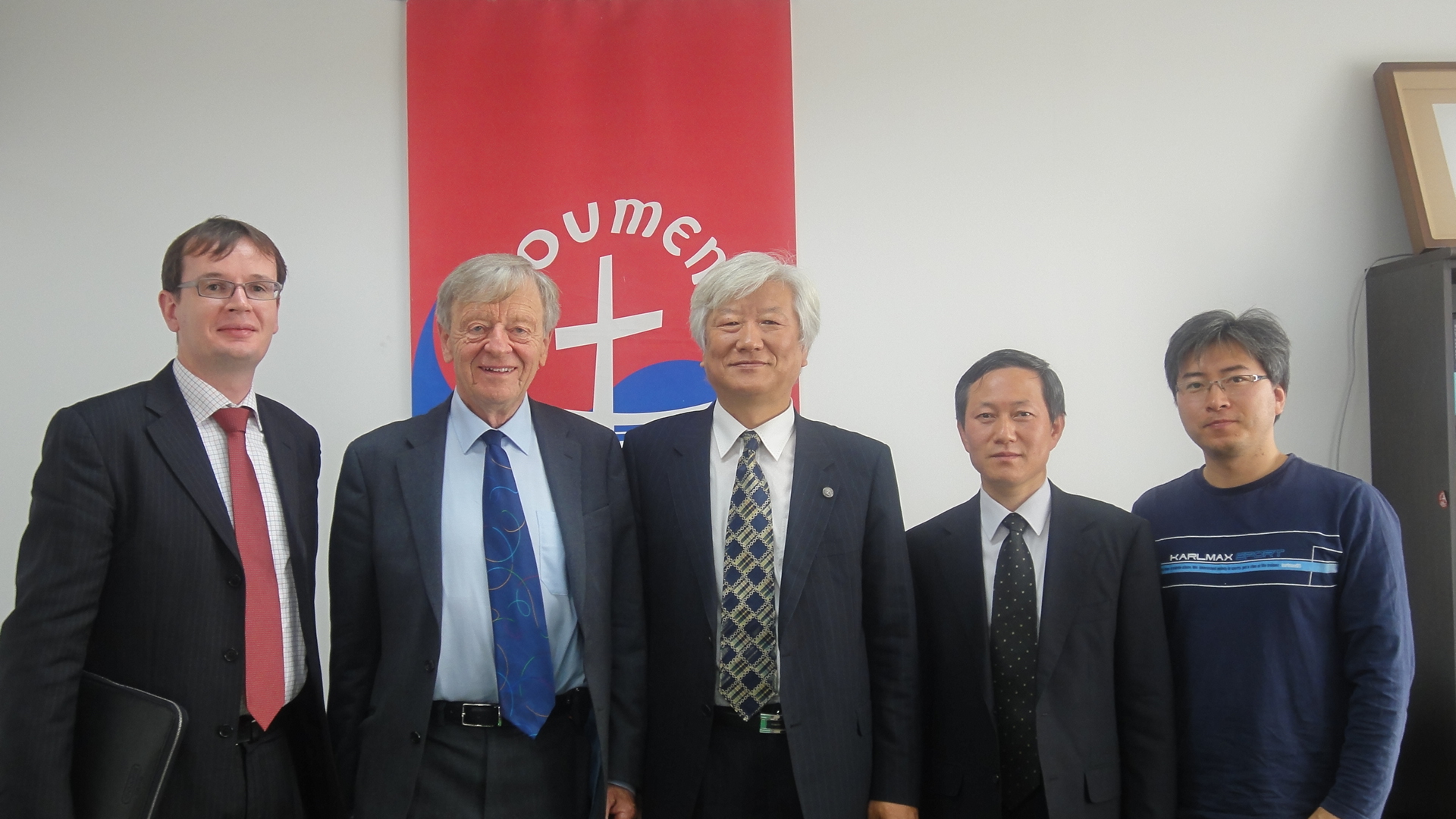
- 사형제 폐지 관련 논의를 위한 Lord Alf Dubs 영국 상원의원 방문
- Lord Alf Dubs 영국상원의원이 지난 10월 10일 오전 9시 40분, 본회를 방문하여 김영주 총무와 사형제 폐지 문제에 대한 상호협력을 논의하였다. Lord Alf Dubs 상원의원은 한국이 사형집행중단 10년 이상이 된 것에 대해 상당히 고무적인 일이라며 교회협이 사형제 폐지를 위해 진행하는 일들에 지지를 표하고 적극 연대할 것을 다짐했다. 김영주 총무도 사형제 폐지 자체는 생명이라는 중요한 가치를 다루는만큼 최선을 다해 교회의 역할을 해나갈 것이고 특히 사형폐지논의와 함께 한국에서 국가와 국가, 국가와 개인의 관계가 한단계 발전하는 중요한 계기가 마련될 수 있기를 바란다며 국제사회의 긴밀한 협력을 요청했다.
- 제주 해군기지 건설 문제로 손학규 민주당 대표 만나
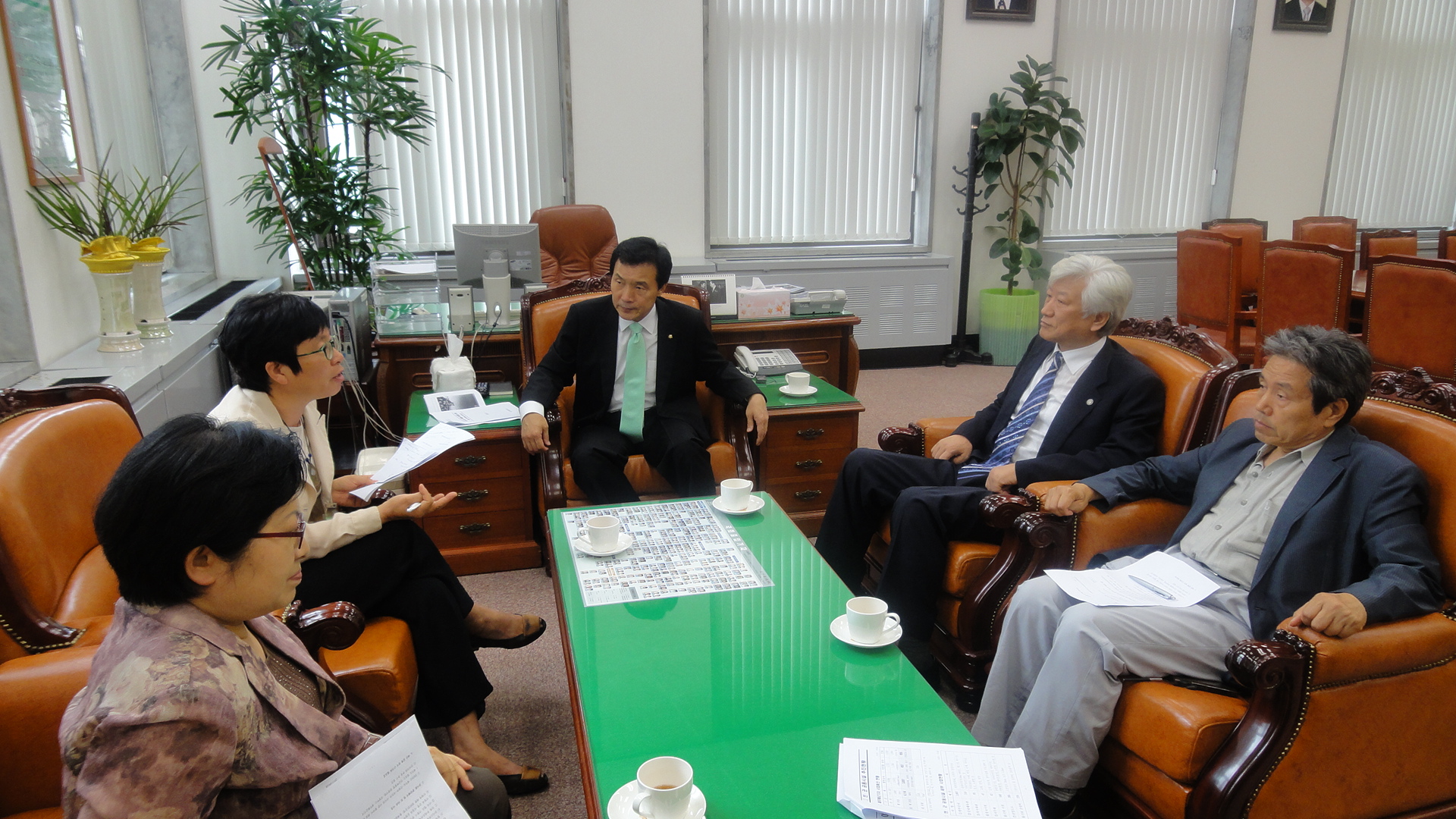
- 지난 8일 본회 김영주 총무는 본회 정의평화위원회 위원장이신 이해학 목사와 함께 민주당 손학규 대표를 방문하여 제주도 해군기지 건설 문제에 대해 함께 이야기를 나누었습니다. 제주도 강정마을에 공권력이 투입되기 시작한 긴박한 상황에서 이번 만남은 의미 있는 만남이었습니다. 이 자리에서 김영주 총무는 몇 가지 요청사항을 전달하였습니다. 첫째, 제주 강정마을에 추가 공권력 투입을 중단해야 하는 일과 둘째, 진행되고 있는 모든 공사를 즉각적으로 중단할 것, 셋째, 해군기지 건설과 예산 동결 및 의결을 최대한 늦춰줄 것, 넷째, 제주 해군기지 사업을 전반적으로 재검토하기 위한 국회 안에 특별위원회를 구성하고 청문회를 개최해줄 것 등을 요청하였습니다. 이러한 요청에 손학규 대표는 제주 해군기지 건설에 대한 문제에 대해 충분히 알고 있고, 요청사항에 대해서도 적극적으로 추진하겠다고 말하였습니다. 본회는 앞으로도 제주 해군기지 건설 문제에 대해 정치권, 세계교회와 함께 연대하여 이 문제를 적극적으로 해결해 나갈 것입니다.
- 사형 집행 중단 5000일 기념 행사에 김영주 총무 기념사
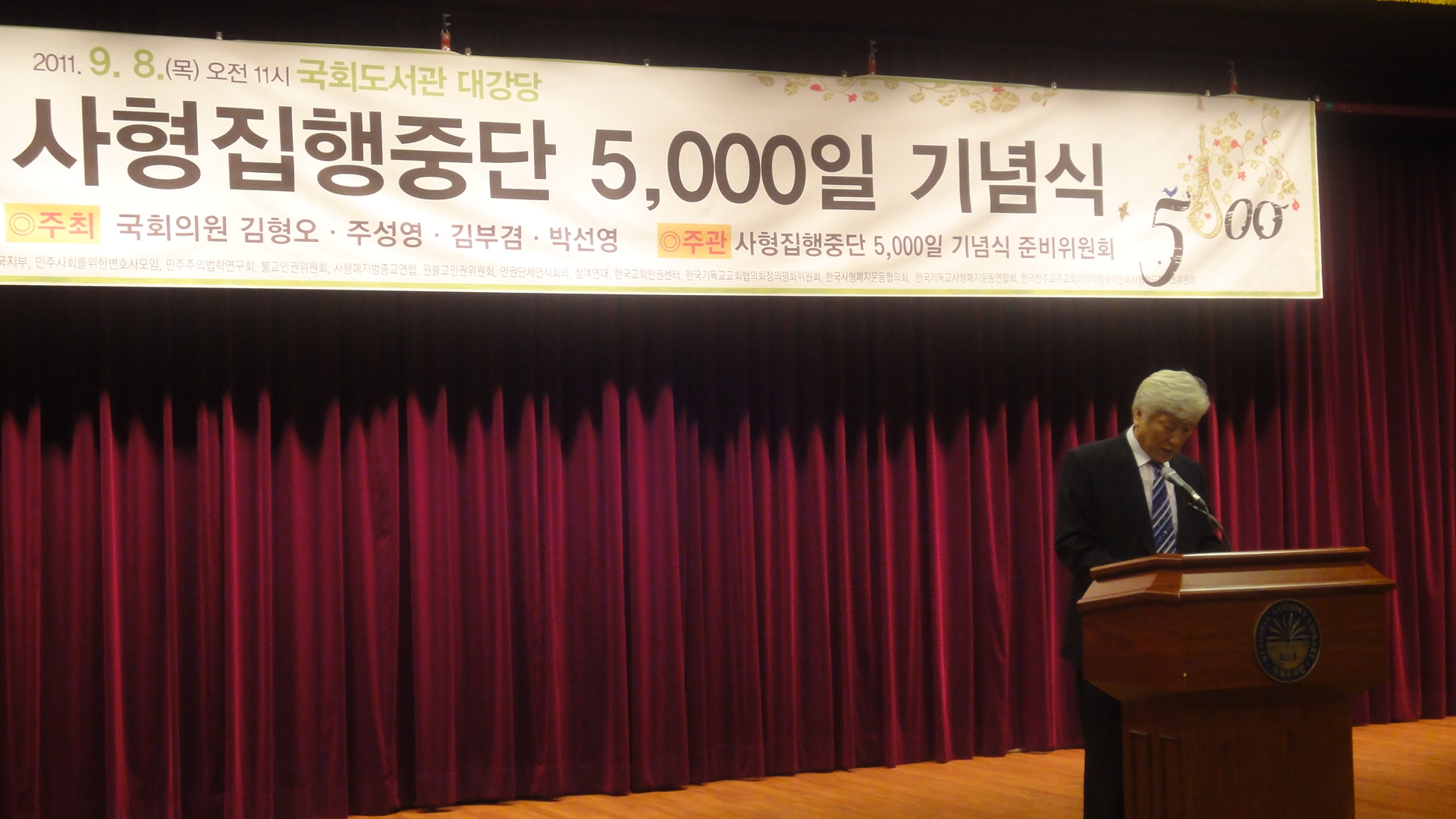
- 지난 8일 본회 김영주 총무는 사형 집행 중단 5000일 기념 행사에 참여하였습니다. 김영주 총무는 이 날 기념사를 통하여 “대한민국이 사형 집행 중단 5000일이라는 뜻깊은 날을 맞이하게 되어 큰 기쁨을 느낀다”고 말하면서 “현재 사형폐지법안이 준비 중인 것으로 아는데, 이제 그 법안이 통과되어 사실상 폐지국이 아니라 법률상 사형 폐지국이 되었으면 좋겠다”고 말하였습니다. 하지만 “앞으로 넘어야 할 산도 많다”고 지적하면서 아직까지 국민 다수가 사형폐지를 반대하고 있는 현실에 대해 적극적으로 사형 폐지가 왜 이루어져야 하는지에 대해 알릴 필요가 있다고 말하였습니다. 그리고 이 일을 위해 본회도 적극적으로 연대할 것을 약속하였습니다.
- 제주 강정마을에 공권력 투입에 대한 본회의 입장
- 강정마을에 대한 공권력 투입과 공사 강행을 즉각 중단하십시오! 우리는 오늘 새벽, 강정마을에 경찰이 마을주민과 평화운동가들을 강제 연행하고 공사 강행용 담을 설치하였다는 소식에 놀라움을 금할 수가 없습니다. 우리는 그동안 제주 해군기지건설 문제가 평화적, 민주적으로 해결되기를 촉구해왔습니다. 그럼에도 정부가 국민으로부터 위탁받은 공권력을 동원하여 국민의 의사를 무시하는 데 사용하고 있는 것에 분노하며 정부의 비민주적 행위를 강력히 규탄합니다. 해군기지 건설 갈등은 처음부터 정치권이 보다 책임적으로 해결해야 할 문제였습니다. 정부가 주장하듯이 안보 상 꼭 필요한 기지라면 정부는 보다 충분한 대화와 설득을 통해 주민의 동의를 이끌어내야 할 의무가 있습니다. 우리는 이것이 국민에 대한 예의라고 확신합니다. 그러므로 민주적 동의 과정을 소홀히 한 채 물리력으로 밀어붙이는 것은 그릇된 처사임을 다시 한 번 강조합니다. 지금이라도 늦지 않았습니다. 정부는 해군기지 건설 문제에 대한 평화적 해결 원칙을 천명하고 대화에 나서야 합니다. 강정마을에 모여 있는 이들은 적이 아니라 국민이기 때문입니다. 우리는 제주 해군기지 건설 문제로 인하여 평화, 생태계, 공동체가 파괴된 것뿐 만아니라, 민주사회의 기초인 정부에 대한 신뢰까지 파괴될까봐 염려하고 있습니다. 그러므로 우리는 다음과 같이 촉구합니다. 1. 1. 정부는 공권력 투입과 공사 강행을 즉시 중단하고, 연행한 시민들을 석방하십시오. 2. 2. 정부는 마을주민을 비롯한 모든 이들에게 어떤 희생도 일어나지 않도록 해야 합니다. 3. 정부는 지금이라도 해군기지건설 문제를 평화적으로 해결하십시오. 2011년 9월 2일 한국기독교교회협의회 총 무 김 영 주 정 의 평 화 위 원 회 위원장 이 해 학
- 본회 실무자를 위한 인문학 강좌 열어
- 본회에서 일하고 있는 실무자들을 위해 한 달에 한 번 인문학 강좌를 개설하기로 하였습니다. 그 첫 번째 모임으로 7일 오전 현대교회 홍인식 목사를 모시고 “해방신학의 어제와 오늘”이라는 주제로 강좌가 시작되었습니다. 홍 목사는 해방신학을 한마디로 가난한 자들의 입장을 대변하는 것이라고 정의하면서, 해방신학은 철저하게 현장 중심의 신학이라고 강조하였습니다. 즉 현장이 없는 해방신학은 존재할 수 없으며, 실천 없는 해방신학은 말할 가치가 없습니다. 해방신학은 철저하게 현장 속으로 들어가 실천하며 사는 삶을 이론적으로 정립한 신학이라고 강조하였습니다 홍 목사는 해방신학이 갖는 의의에 대해서 첫째, 새로운 해석학과 신학방법론을 제시하였다는 점과, 둘째, 억압과 해방이라는 프레임을 갖추고 있다는 점, 셋째, 반성서적 이원론에 대해 비판하였다는 점을 꼽았습니다. 해방신학은 철저히 투쟁과 관련이 되어 있고, 그 투쟁을 통해 진정한 해방의 기쁨을 맛볼 수 있다고 말하였습니다. 홍 목사는 끝으로 해방신학의 선교적 과제로 두 가지를 제안하였습니다. 하나는 “이끌어 냄”입니다. 현대사회를 지배하고 있는 경제신화(신자유주의)로부터 이끌어 내야 한다는 것이고, 다른 하나는 “데려감”인데 데려감은 더 나은 세상으로 데리고 간다는 의미입니다. 결국 한국교회의 상황에 해방신학을 어떻게 접목시킬 것인지에 대한 과제와 함께 현재 한국교회의 모습은 너무 상업화 되어 있고, 가난한 자들을 배려하지 않는 부정적 모습을 보이고 있는데, 이러한 상황에서 해방신학을 통해 한국교회를 재조명하고, 대안을 찾아나가는 것은 매우 의미 있는 일이 될 것이라고 강조하였습니다.
- 평화의 섬 제주를 지키기 위한 기도회 열어
- 본회 정의평화위원회는 지난 6일(화) 제주 강정마을 중덕삼거리에서 평화의 섬 제주를 지키기 위한 기도회를 개최하였습니다. 법원의 판결로 공권력 투입이 언제든 가능한 긴박한 상황에서 이루어진 기도회였습니다. 본회 지도력개발위원회 위원이신 박상희 목사의 인도로 시작된 기도회는 제종원 목사(대한예수교장로회 제주동남교회)의 목사로 이어졌습니다. 제 목사는 기도를 통하여 평화의 섬 제주에 하나님의 평화가 임하기를 기도하면서 평화를 깨뜨리는 세력에 맞서 하나님의 평화를 제주에 이루어내자는 내용의 기도를 드렸습니다. 한국기독교장로회 농촌목회자협의회의 특별찬양은 왜 제주가 평화의 섬이 되어야 하는지 마음 속 깊이 느끼게 해주었습니다. 여호수아 6장 20~21절의 본문을 통해 “담을 쌓는 자는 망한다”라는 제목으로 설교한 이해학 목사(교회협 정의평화위원회 위원장)는 평화를 지키기 위해 이곳에서 외롭게 투쟁해 온 주민들과 평화활동가들의 헌신성에 고개를 숙이게 된다고 말하면서 담을 쌓는 자는 그것이 자본이건 세계지배건 군사력이건 망한다고 설교하면서 이금 이곳에 세워진 펜스(담)를 쌓고 해군기지를 건설하려는 목적 자체가 망하는 길로 가는 것이라고 강조하였습니다. 평화를 지키기 위해서 이제 모두가 하나가 되어야 하고, 그 하나됨을 위해 뒤늦게나마 이곳에서 기도회를 하는 것이라고 말하였습니다. 설교가 끝난 후 고권일 제주도지역대책위원장과 현애자 전(前) 국회의원의 상황나눔의 시간이 있었으며 공통적으로 해군기지 건설에 대한 부당함과 억울함을 호소하였습니다. 특별기도 순서에는 “평화 생명 민주적 세계를 위하여”라는 제목으로 손흥수 사관(구세군대한본영 서귀포영문)가 기도하였고, “강정마을 주민과 평화활동가들을 위하여”라는 제목으로 전진택 목사(교회협 생명윤리위원회 위원)가 기도하였습니다. 기도회는 우리의 선언을 박동식 신부(대한성공회 제주교회)가 읽는 것으로 마무리되었습니다. 박 신부는 평화의 섬 제주는 전쟁 기지가 아니라 평화의 상징이어야 한다는 선언 외에 총 10가지의 선언을 읽었습니다. 우 리 의 선 언 이 땅에 생명 평화 정의를 이루기 위해 기도하는 우리는 안타까운 제주의 현장에서 간절히 기도드리며 다음과 같이 선언합니다. 1. 평화의 섬 제주는 전쟁 기지가 아니라 평화의 상징이어야 합니다. 2. 세계가 지정한 천연 지역은 생명 넘치는 곳으로 남아 있어야 합니다. 3. 민주 공화국 대한민국 정부는 주민의 뜻을 철저히 존중해야 합니다. 4. 파괴된 강정마을 공동체는 신속히 회복되어야 합니다. 5. 정부는 어떤 이유로도 물리력이 아니라 대화로 해결할 것을 선언해야 합니다. 6. 국회는 특별위원회를 구성하여 해결에 보다 적극적으로 나서야 합니다. 7. 생명과 평화를 위해 헌신하다 구속된 이들은 즉각 석방되어야 합니다. 8. 정부는 문제해결을 위한 대화를 시작하고, 경찰은 육지병력을 철수해야 합니다. 9. 정부는 매장 문화재보호 및 조사에 관한 법률에 따라, 공사를 중단하고 공사현장에서 발굴되는 유물을 보존한 후 문화재청장과 협의하도록 되어 있는 현행법을 스스로 지켜야 합니다. 10. 십자가와 부활의 주님을 따르는 우리는 생명과 평화의 섬 제주를 위해 기도의 행진을 이어갈 것입니다. 2011년 9월 6일 한국기독교교회협의회 정의평화위원회 주최 평화의 섬 제주를 지키기 위한 기도회 참석자 일동