- 2008 종교시설(교회, 상당) 문화 공간화 사업 선정 공모
- ○ 사 업 명 : 종교시설(교회, 성당) 문화예술 프로그램 발굴 지원사업
○ 사업기간 : 2008. 5 ~ 11월
○ 지원대상 : 교회, 성당 등을 이용하여 문화소외지역의 지역주민을 대상으로 시행(예정)하고 있는 상설 문화예술프로그램(신자 대상 문화행사나 순수 종교행사는 지원 제외)
○ 지원내용 : 1건당 1천만원 내외
○ 신청자격 : 교회, 성당 등 종교시설 운영자(대표)
○ 지원내역 : 프로그램 진행비, 출연자 사례비, 홍보비 등
□ 선정기준
○ 추천대상 연합단체별 6~10개소 이내 선정 지원
○ 도시 빈민촌(달동네), 산간벽지, 농어촌지역 등 문화소외지역의 프로그램 우선 선정
○ 다른 중앙행정기관, 지방자치단체 또는 공공단체 등에서 일부 지원받는 사업은 제외
□ 사업선정시 유의사항
ㅇ사업장소는 반드시 교회,성당 혹은 교회․성당 소유의 교육관 등이여야 합니다
ㅇ사업주관도 반드시 교회,성당의 대표여야 합니다
ㅇ국고보조금 지원은 1개 교회․성당에서 1개 사업으로 1,000만원이내를 원칙으로 합니다
ㅇ자부담 비율은 최소 30%이상이여야 합니다
ㅇ사업기간및횟수는 주1회이상, 3개월이상 지속사업이여야 합니다(1회성 이벤트 행사 지양)
ㅇ사업대상에 해당 교회․성당의 교인을 대상으로 할 수 없습니다.
2007년 선정사업 예시(* NCC로 접수되었고 평점을 높이 받은 프로그램)
성공회 강동교회
제 목: 강동지역 어르신 어울림 문화마당
기 간: 2007년 5월~12월
지원금: 5백만원 (자부담 5백8십만원)
대 상: 서울 강동지역 어르신
내 용: 효도음악회(1), 영화관람(7), 국악공연(4), 문화체험나들이(1), 나눔음악회(1), 어르신노래자랑(1), 마술공연(1)(괄호 안 숫자는 개최 횟수)
감리회 샘터교회
제 목: 지역공동체 문화예술 감수성 개발
기 간: 6~12월
지원금: 7백만원(자부담 7백1십5만1천원)
대 상: 서울 중구지역 주민
내 용: 어린이(자연생태캠프1,똥벼락공연1,나눔축제1),학부모강연(9), 느티나무생명학교가족체험(4)
□ 제 출 서 류
○ 지원신청서 1부(붙임 양식 참조)
- 세부사업계획은 별지에 구체적으로 작성 제출
- 프로그램 소개 및 신청처의 주요활동 실적 포함
※ 지원신청서는 반드시 해당 연합단체 경유 신청(문화체육관광부로의 직접 신청은 불가함)
□ 신청기간 및 접수처(*게재 연합단체의 주소/우편번호/담당자 등 기재)
○ 신청기간 : 2008. 4. 7(월) ~5. 2(금)
○ 제 출 처 :
- 교회(가, 나 중 1개 연합단체)
한국기독교교회협의회((회원교단 소속교회)
(우) 110-736
서울시 종로구 연지동 136-46 한국기독교회관 706호
문의 : 763-7323 (일치협력국 : 김태현 국장)
□ 기타사항
○ 선정 사업 및 세부 보조금교부계획 등은 문화체육관광부에서 추후 별도 통보
※아래 참고자료의 2007년도 사업중 위의 조건에 위배되는 사업이 있으나 최초사업 실시에 따른 정확한 기준이 없었던 때문이며 2008년도 부터는 가급적 위의 유의사항은 지켜져야 할 것으로 여겨집니다
-
일치·대화
- WCC 기독교 이슬람 대화 위한 성명 발표
-
세계교회협의회는 3월26일 기독교와 이슬람교 간의 차이를 인정하고 함께 공감대를 형성해 나가야 한다는 성명을 발표했다.
‘서로 사랑하는 방법 배우기’란 제목의 이 성명을 통해 WCC는 ‘이웃에 대한 사랑은 하나님의 명령이며, 종교와 관계없이 기독교인이나 이슬람인 모두에게 해당된다’며 ‘서로의 차이를 인정함으로서 반목과 대립의 관계를 극복해 나가야 한다‘고 강조했다.
WCC 사무엘 코비아 총무는 이 성명을 통해 ‘이슬람 지도자들과 신앙적 대화를 나눌 기회를 마련했다’며 ‘전 세계적으로 종교적 충돌 현상을 빚고 있는 상황에서 성명은 희망의 도구가 될 것’이라고 기대감을 나타냈다.
기독교-이슬람 대화 프로그램을 담당하고 있는 리마 발섬(Rima Barsoum)도 ‘이번 성명이 양 종교간 대화를 시작하는 신호탄이 될 수 있을 것’이라며 ‘양 종교간의 대화가 국제적으로 그리고 지역 차원에서 종교 협력을 가져오게 될 것’이라고 밝혔다.
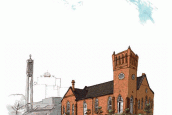
(사진 : Church and mosque - neighbours in Leeds, UK. Photo: Nuala Bugeye, 2008@WCC)
*이하 WCC "서로 사랑하는 방법 배우기‘ 전체 성명서
LEARNING TO EXPLORE LOVE TOGETHER
Suggestions to the Churches for Responding to "A Common Word"
Preamble
On 13 October 2007 a group of 138 Muslim scholars addressed an open letter to Christian leaders. Among those addressed was the General Secretary of the World Council of Churches.
Based on initial responses from member churches, the WCC initiated a process of responding to the letter. Since November 2007 the WCC commenced consultation with its member churches and ecumenical partners, a number of whom responded with great enthusiasm. This was followed by a meeting of scholars and church experts engaged in the field of Christian-Muslim relations. Their deliberations produced the following commentary on the letter entitled “Learning to Explore Love Together”. The commentary is intended to assist the churches in reading and responding to the letter “A Common Word”. The document includes suggestions to encourage member churches and ecumenical partners in their reflection on the Letter and in its invitation to explore together with Muslim fellows the love of God and the love of neighbour in their respective contexts.
Churches and ecumenical partners are then invited to share their reflections with the WCC as a contribution to a common understanding of and a common response to this initiative. The on going process of reflection and the desire to create a common response to the letter through an initiative of dialogue is described below.
A Letter from 138 Muslim Scholars
The Letter, entitled A Common Word between Us and You (drawing upon an invitation to conversation in common between Christians and Muslims that appears in the Qur’an), sets out key dimensions of belief and action that in its authors’ understanding followers of the two faiths hold in common. They sum these up in the two-fold commandments of love expressed in the Bible: ‘You shall love the Lord your God with all your heart, with all your soul, and with all your mind, and your neighbour as yourself’. To this end, by citing verses from the Bible, the Qur’an and Hadith (the sayings of the Prophet Muhammad), the letter briefly shows how Christians and Muslims share similar teachings about love for God and love for neighbour. On the basis of these shared teachings, the authors then issue an invitation to Christians to join together with them ‘on the common essentials of our two religions’. They also make clear that there are differences between Christianity and Islam, and counsel that ‘there is no minimizing some of our formal differences’. But they recall that since 55% of the world’s population belongs to these two religions, “making the relationship between these two religious communities [is] the most important factor in contributing to meaningful peace around the world. If Muslims and Christians are not at peace, the world cannot be at peace.”
This invitation marks an encouraging new stage in Muslim thinking about relations between Muslims and Christians. Throughout their shared history, followers of the two faiths have too often misunderstood one another. In recent times, a new way of thinking about the other took place; the churches have begun to think afresh about the relationship between Christianity and other faiths, including Islam - prominent among the outcomes of this thinking are the Roman Catholic Church’s Declaration on Relations between the Church and non-Christian Religions, 1965, and the World Council of Churches’ Guidelines on Dialogue with People of Living Faiths and Ideologies, 1979. Here, in A Common Word is a clear indication that leading Muslim intellectuals and religious leaders are committed to fresh thinking about the relationship between Islam and Christianity. The courage of their action must be applauded – and since then around one hundred more scholars have signed the Letter - and the sincerity of their gesture must be welcomed in the warmest terms.
Ways towards a Response
After consultation with its member churches and ecumenical partners, and with the advice of specialists, the World Council of Churches proposes to initiate a process that, with patient reflection and mutual exploration between the people of the churches and the people of the mosques, can lead to fresh awareness one of the other, abandonment of stubborn prejudices, and new ways forward in respect and cooperation.
The following steps summarize the process:
The World Council of Churches encourages its member churches and ecumenical partners, to recognize and welcome the serious intent of A Common Word and prayerfully consider its invitation to dialogue and cooperation. It also invites them to reflect ecumenically on the content of the Letter in their own unique contexts. While acknowledging that some churches have already begun this journey, the present document is aimed at facilitating and deepening such endeavours.
The Council will call on its Muslim partners – especially the signatories to the Letter – to create a joint planning group to prepare steps towards common action, and seek joint Muslim and Christian initiatives of dialogue and cooperation at both the regional and global levels.
The Council will propose to this group, the organizing a series of consultations between Muslim and Christian leaders, scholars and practitioners which, based on this new opportunity, will reflect on points of mutual understanding, work on a theological and ethical framework for future joint initiatives and establish new means of exploring further in both matters of faith and life.
These steps are taken on the understanding that the invitation in the Letter is issued by its signatories in full awareness of the difficulties that have accompanied past efforts, and that it signals a new and vigorously energized desire for a fresh start.
Exploring Together the Love for God and Love for Neighbour
The Letter eloquently underlines similarities on the key points of love for God and love for neighbour which both Christians and Muslims respect. However, the differences between the ways in which they each understand these imperatives and put them into practice cannot be ignored.
The testimony of past and present writings by Muslims and Christians about and against the other serves as a clear reminder that misunderstanding can easily arise when followers of each faith try to explore the other’s beliefs without proper care and attention. Therefore, it must be stated unequivocally that Christians should be ready to learn about Islam by listening closely to what Muslims themselves teach, and that Muslims should be ready to learn about Christianity by listening closely to what Christians themselves teach. Presuppositions are to be put aside, and followers of both faiths must be ready to seek the learning and wisdom of the other as the other imparts it according to their own unique insights.
Exploration of love for God together will undoubtedly yield startlingly instructive insights for both Christians and Muslims. In the same way, exploration of love for neighbour together will reveal many points on which Muslims and Christians will recognize commonly held principles and actions. But these signs of similarity must be held in tension with real divergences and hard to reconcile differences.
Thus, for example, while both Christians and Muslims say they perceive God as one, what is actually meant in Islam by the doctrine of Tawhid (Unity of God), and what is actually meant in Christianity by the doctrine of the Trinity? Are these contradictory doctrines, as the history of engagement between the two faiths attests, or is there a way in which they can be seen as complementary insights into the mystery of God?
Similarly, while both Muslims and Christians claim to receive revelation from God, what is meant when Muslims claim to perceive the will of God revealed in the Qur’an - what has been called the Word of God become book-, and what is meant when Christians claim to perceive God’s self revealed in Jesus Christ - who is called the Word of God become flesh?
In the same way, the love of neighbor is an essential and integral part of faith in God and love of God in both religions. Both Christians and Muslims obey God by seeking to respond to need in society. In Islam loving one’s own neighbor is expressed in acting with responsibility and generosity towards the needy within the community. In Christianity the love of neighbour is seen as a reflection of God’s love to humanity through Jesus Christ. This love transcends geographical and religious boundaries and thus embraces humanity in all its components without exception as it is expressed in the parable of the Good Samaritan.
The concept of love of God and love of neighbour is but one bridge and point of dialogue for action, at the same time Christian-Muslim dialogue and cooperation should explore a common ground in the search for justice and peace.
Agreeing and Disagreeing in Respect and Love
While Christians and Muslims may often be surprised to recognize in the utterances and explanations of the other what can appear to be reflections of their own beliefs, they will also see stark divergences in emphasis and some clear differences that resist all resolution by mutual efforts. Not the least of these will be the Christian difficulty of appreciating Muhammad as a prophet, and the Muslim difficulty of appreciating Jesus as God incarnate. These spring from sincerely held views that have been keenly defended for centuries, and as keenly questioned and rejected.
It is therefore a pressing necessity that while Christians and Muslims must find ways of enhancing what they hold in common, they must also find ways of acknowledging and respecting the differences between them, of attempting to understand these, and of not allowing them to fuel hostility. The degeneration into mutual recrimination and condemnation is a pattern that has been repeated in the past to the sorrow of people of good will, who would also acknowledge with regret the ways in which religion has been misused. This may easily continue in the future unless careful steps are taken to prevent it.
With understanding the plurality and complexity of their shared history, both Christians and Muslims must work hard to develop respect where understanding is difficult and trust where differences do not yield to inquiry. In full recognition of the long history they hold in common, while recalling examples of humane mutual respect, they must recognize the need to work actively to heal hurts both local and global, and to change attitudes and stereotypes. Member churches are encouraged to recall and learn from each other’s experiences, and examine how these might inform and challenge their future actions.
More than this, even when Christians and Muslims continue to disagree on matters of belief, they should strive to reach the point at which they can recognize and endorse what they hold in common with sufficient integrity to allow them to work together in the world. Thus, they should make it a priority to understand how the precious heritages they each hold can direct and even impel them to work together for justice and peace, recognizing their joint goals and responding to the call of the One they worship and obey to come together not only in a common word but also in common action for the greater glory of God and the wellbeing of all.
- 2008남북교회 부활절 공동기도문 발표
-
한국기독교교회협의회(NCCK 총무 권오성)는 매년 예수 그리스도의 부활을 기뻐하며 부활절 예배를 드리고 있으며, 특히 조선그리스도교련맹(이하 조그련)과 함께 공동기도문을 작성해 함께 기도하고 있다.
공동기도문 작성을 담당하고 있는 NCCK 화해통일위원회(위원장 이종복)는 지난 1월 공동기도문 초안을 작성해, 2월 초 독일에서 조그련 대표를 만나 기도문 초안을 전달했다.
이에 조그련에서는 2월 27일 국제부 리정로 부장의 명의로 공동기도문의 최종 수정안을 보내왔다.
기도문은 ‘우리 민족의 평화 통일을 위한 노력이 외부 요인에 의해 때로 불안과 갈등 그리고 분노와 다툼이 여전히 존재하지만, 신뢰를 바탕으로 평화를 이뤄나가겠다는 의지’를 담고 있다.
또, 최대한 사회와 교회 교인들에게 친근한 언어를 기도문에 담아, 함께 기도하고 받아들일 수 있도록 했고, 평화 통일에 대한 강한 믿음을 고백하도록 했다.
2008 남북교회 부활절 공동기도문
역사와 우리 민족의 주인이신 하나님,
오늘 우리는 죽임과 살림의 갈림길에서
거짓과 진리 사이의 선한 싸움을 통해
영원한 생명으로 부활하신 주님을 예배합니다.
찬양 받으시기에 마땅하신 주님!
우리에게 새 생명의 아침을 허락하심에 감사드립니다.
우리 민족이 부활의 새 날에 그리스도의 평화와 생명에 참여하게 하옵소서.
지금도 살아계셔서 우리와 함께 하시는 주님!
부활의 한 날이 영원한 새 날을 낳고,
부활하신 한 사람으로 만민과 만물의 구원을 이루셨듯이,
이제 우리가 주님의 자비와 은총을 힘입어
전쟁과 갈등의 현실로부터, 반목과 질시의 세상으로부터 자유하게 하옵소서.
평화의 왕이신 주님!
이 땅 한반도에는 여전히 외세로부터 드리워지는 그림자가 있습니다.
이 그림자 속에 여전히 눈물과 탄식, 분노와 다툼이 존재합니다.
믿음과 소망이 없는 자들은 아직도 기다림은 아득하고, 하나 됨은 멀다고 합니다.
그러나 우리 남과 북 그리스도인들은 7천만 민족이 하나 됨을 믿습니다.
상호 교류와 협력으로, 화해와 평화가 정착됨을 믿습니다.
부활 생명의 눈으로 볼때, 이미 우리민족은 평화와 통일을 살고 있음을 고백합니다.
주님!
이제 이 땅 남과 북의 교회가, 그리고 북과 남의 자매와 형제들이
한 마음으로 부활의 역사를 이루게 하옵소서.
또한, 믿음과 행함으로 평화의 삶을 누리게 하옵소서.
그리하여 흰옷의 백성으로 거듭나게 하시고, 흰백의 민족으로 새로워지게 하옵소서,
그리하여 이웃을 섬기는 평화의 나라를 이루고, 세상의 등불로 다시 서는 통일의 내일을 열어가게 하옵소서.
부활하신 예수 그리스도의 이름으로 기도합니다. 아멘
2008년 3월
한국기독교교회협의회 조선그리스도교련맹
-
일치·대화
- (메시지) 2019년 사순절 메시지
- 2019년 한국기독교교회협의회 사순절 메시지
한국기독교교회협의회 부활절맞이를 시작하며
“고난 속에서 피어올린 희망”
천국은 마치 사람이 자기 밭에 갖다 심은 겨자씨 한 알 같으니 이는 모든 씨보다 작은 것이로되 자란 후에는 풀보다 커서 나무가 되매 공중의 새들이 와서 그 가지에 깃들이느니라.(마 13:31-32)
100년 전 패권적 제국주의의 폭압 속에 정의롭고 아름다운 평화의 선언이 피어올랐습니다. 고통에 무너지면서도 희망하는 바는 반드시 이루어진다는 것을 보여준 3.1운동은 스러져가던 민족의 운명 앞에서 “우리 속에서 마음이 뜨거워진”(눅 24:32) 부활 사건입니다. 이후에도 전쟁, 분단, 독재, 광주 학살, 세월호 참사 등 무수한 고통의 현실에 놓여왔지만, 그때마다 우리는 민주주의와 정의, 더불어 사는 가치를 외치며 눈에 보이지 않는 믿음과 희망의 역사를 살아왔습니다.
2천 년 전 예수님의 수난과 죽음으로 절망에 빠진 두 명의 제자는 자신들의 안위를 찾아 엠마오로 떠납니다. 그러나 부활하신 예수님과 함께 길을 걸으며 두 제자는 뜨거운 감동을 얻고, 발길을 예루살렘으로 돌려 그 감동과 기쁨을 절망에 빠진 모든 사람과 함께 나눕니다. 사람과 사람, 공동체와 공동체 간의 나눔과 연대로 이어진 예수님의 부활 사건은 모두가 “더불어 흔쾌한 부활”의 역사로 지금까지 이어지고 있습니다.
한국기독교교회협의회는 3.1운동 100년과 함께 맞은 2019년 사순절 기간에, 지나온 역사를 성찰하며 우리 민족이 수난 속에서도 희망으로 승화한 평화의 정신을 조명하고자 합니다.
분단의 긴장이 첨예한 DMZ 현장에서 사순절을 시작하여, 고난주간에는 일본제국주의에서부터 한국전쟁, 민주화 항쟁에 이르기까지 아직도 이유 없는 죽음들의 흔적이 짙게 남아있는 역사의 현장에서 우리 그리스도인들이 짊어지고 가야할 시대의 고난과 사명을 성찰합니다.
지금도 삶을 억압하는 구조는 여전합니다. 노동권을 위한 노동자의 투쟁, 안전하지 못한 일터의 직장인, 이국땅에 와서 전혀 다른 문화로 힘들어하는 이주민, 차별에 노출된 여성, 빈곤을 대물림해야만 하는 청년, 대중 속에서 소외되고 고독한 사람들, 그리고 아직도 해결되지 않은 한반도의 분단 상황. 억압과 종속적 일상과 부조리 등. 그러나 고난 중에 있던 약소민족이 전 세계와 “더불어 흔쾌한 부활”을 선언한 것처럼, 주님과 동행하며 뜨거워진 마음으로 모두의 안녕을 위해 예루살렘으로 돌아간 두 제자처럼, 우리도 고통과 아픔의 자리에서 희망과 공생의 길로 함께 나아가기를 바랍니다.
고통이 현실이라면 희망도 현실입니다. 아직 온전한 자주와 해방을 이루지 못한 우리의 일상에, 생명이 경시되는 사회 전반의 구조에, 분단으로 고통받는 한반도에 그리스도의 부활과 희망을 나누고 선언하는 사순절이 되기를 바랍니다. 세상의 아픔과 고통을 짊어지신 예수님의 고난에 참여하며 희망과 기쁨의 소식을 전하는 우리가 되기를 바랍니다.
-
일치·대화
- 2019 NCCK 일치교육국 정책협의회 보고(자료집 첨부)
- 2019 일치·교육국 정책협의회 보고
1. 주 제 : “에큐메니칼 운동의 지속가능성을 향하여”
2. 일 시 : 2019년 2월 21일(목) 오후 3시 ~ 22일(금) 오전 11시
3. 장 소 : 유성 계룡스파텔 2층 을지홀 (대전광역시 소재)
4. 참 석 :
교회일치위원회 - 김기리, 김진수, 김창주, 박인곤, 백승훈, 백용석, 이찬석, 정진회, 홍석민, 황선엽 (10명)
신학위원회 - 김명실, 김판임, 김한나, 박찬웅, 백진수, 양권석, 홍인식 (7명)
교육위원회 - 고성휘, 김영철, 오세욱, 이원돈, 이은경, 장세희, 전남병, 조언정, 하성웅 (9명)
지역교회협의회 - 박태권, 이영재, 최성진, 한경섭, 한창승 (5명)
장애인 - 이정훈 (1명)
실무자 - 강석훈, 김현주, 서범규 (3명)
총 참석 인원 - 35명(실무자 3명 포함)
5. 취지와 목적 : 교회일치 정신이 교회간 거룩한 친교, 신학 연구 및 교류, 에큐메니칼 교육으로 이어져 지속가능한 에큐메니칼 운동이라는 과제를 감당하고자 67회기를 맞아 재편된 일치·교육국(교회일치위, 신학위, 교육위)의 향후 정책 논의
6. 진 행 :
1) 개회예배 - 사회 : 김명실 목사, 기도 : 백승훈 청년, 설교 : 남재영 목사
2) 코이노니아 - 소속, 기대, 느낌 나눔 (사회 : 강석훈 국장)
3) 에큐메니칼 운동에 대한 서로의 이해 나누기 (사회 : 박찬웅 목사, 발제 : 이영재 목사)
4) 에큐메니칼 운동에 대한 서로의 기대 나누기 (사회 : 황선엽 사관, 발제 : 홍인식 목사)
5) 에큐메니칼 운동의 지속가능성을 향한 우리의 과제 (사회 : 김영철 목사)
6) 폐회 기도회 - 사회 : 김창주 목사
7. 내 용 :
1) 에큐메니칼 운동에 대한 서로의 이해 나누기 (첨부. 발제문 ‘에큐메니칼 운동의 역사적 의의에 대한 새로운 성찰’)
(1) 에큐메니칼 운동의 담론이 지역교회에까지 원활히 전달되지 않는 상황을 어떻게 극복할 것인가에 대한 논의와 연구가 필요한 상황임을 공감.
(2) NCCK를 중심으로하는 에큐메니칼 운동이 어떻게 지역교회와의 공감을 확대, 확장하여 갈 수 있을까를 고민해야하며, 이에는 NCCK를 비롯한 에큐메니칼 운동권과 지역교회 모두의 반성이 필요하다는데 공감.
(3) 에큐메니칼 운동 기구로서의 NCCK와 에큐메니칼 운동 현장으로서의 지역교회의 관계는 NCCK는 현장과 시대의 정신을 반영하는 명제·정책들을 연구·제안하고 지역교회는 NCCK가 제시·제안하는 명제·정책들을 현장에서 적용하기 위하여 고민하고 그 결과(발생하는 문제들을 포함하는)를 feed-back하는 관계를 이루어가야 한다는데 공감.
(4) 현장에서 전달되어 오는 다층적이고 다원적인 문제, 요구들에 응답하기에 그동안의 구조는 도식적이었음을 반성하며 다층적, 다원적 응답과 해답을 위해 연속적인고 긴밀한 소통의 장이 필요하다는데 공감.
2) 에큐메니칼 운동에 대한 서로의 기대나누기 (첨부. 발제문 ‘교회의 일치’)
(1) 에큐메니칼 운동의 방법론에 대한 논의에서 벗어나 온전한 일치를 이루기 위한 행정적, 교단적, 교리적 일치를 넘어서는 실질적, 지역적 일치를 추구해 가자는데 공감.
(2) 이를 위해 역설적으로 일치에 대한 더 깊은 신학적 논의와 서로를 알아가기 위한 에큐메니칼 친교와 배움이 필요하다는데 공감.
(3) 현장으로서의 한국사회와 교회의 토양과 문화의 변화에 대응하기 위한 기구와 현장의 끊임없는 비판적 대화가 필요하다는데 공감.
(4) 기구로서의 NCCK를 중심으로하는 에큐메니칼 운동권과 현장으로서의 지역교회 사이의 소통과 매개 역할을 담당할 중간 리더쉽과 에큐메니칼 운동을 지속해갈 청년세대의 부재를 해결할 방안에 대한 논의와 연구가 필요하다는데 공감.
3) 에큐메니칼 운동의 지속가능성을 향한 우리의 과제
(1) 에큐메니칼 운동의 주체적 참여자로서 프로그램 위원, 지역 교회 등 깨어있는 참여자의 중요성을 확인.
(2) 한국교회의 획일적 경쟁 상황에 대하여 선교적 아젠다로서의 접근과 동시에 서로 다른 다양한 신앙적 전통의 이해에 의한 접근을 활발히 할 필요가 있음을 확인.
(3) 에큐메니칼 운동의 지속가능성을 위하여 선교적 과제로서의 연대와 동시에 신학적, 교리적 차원의 논의구조를 활성화하는 사업의 중요성 확인.
(4) 에큐메니칼 운동에의 접근과 참여에 있어 합의(일치)에 이르러 가는 논의과정의 중요성을 확인.
(5) 일치·교육국 내 3개 위원회(교회일치위, 신학위, 교육위)의 긴밀한 연대 필요성을 확인하고 향후 협의와 논의의 소통구조를 지속해나갈 필요성에 공감.
4) 청년 - NCCK의 사업과 논의가 중년, 남성, 목회자 중심이어서 청년, 평신도로서 참여의 매력을 점점 상실해가고 있음. 지속가능한 에큐메니칼 운동을 위하여 모든 세대가 공감할 수 있는 것이 운동이 되어야 한다는 요청.
5) 장애인 - 사회적 약자들의 어려움을 공감하며 그들의 입장에서 활동하는, 사회적 약자들의 기대로서의 종교, NCCK의 역할을 포기하지 말 것을 요청.
- 한국기독교교회협의회 2019년 부활절메시지
그리스도와 이웃과 “더불어 흔쾌한 부활” - 3.1운동 100년, 함께 만드는 평화
“그들이 서로 말하되 길에서 우리에게 말씀하시고 우리에게 성경을 풀어 주실 때에 우리 속에서 마음이 뜨겁지 아니하더냐 하고, 곧 그 때로 일어나 예루살렘에 돌아가 보니 열한 제자 및 그들과 함께 한 자들이 모여 있어 말하기를 주께서 과연 살아나시고 시몬에게 보이셨다 하는지라. 두 사람도 길에서 된 일과 예수께서 떡을 떼심으로 자기들에게 알려지신 것을 말하더라.”(누가복음 24:32~34)
“양심이 우리와 함께 있으며, 진리가 우리와 함께 나아가는도다. 남녀노소 없이 어둡고 답답한 옛 보금자리로부터 활발히 일어나 삼라만상과 함께 기쁘고 유쾌한 부활을 이루어내게 되도다.”(3.1 독립선언문 중에서)
예수 그리스도의 부활은 남녀노소 상관없이 삼라만상과 하나님의 창조세계 모두에게 더없이 유쾌한 사건입니다. 예수 그리스도의 부활사건의 진정한 의미는 고난당하는 삶의 한복판에서 하나님의 평화를 갈망하는 사람들에게서 더욱 분명히 드러납니다. 예수 그리스도는 스스로를 낮추시고 몸소 약해지심으로 이 땅에 오셨고, 스스로 가난해지심으로 십자가를 지셨습니다. 고난을 기꺼이 짊어지는 거룩한 수난자가 되심으로 죽임의 자리에서 부활을 소망하는 이들에게 참 소망이 되셨습니다. 예수 그리스도는 생명을 억압하고 죽이는 권력의 어둠이 집어삼킬지라도 결코 죽임을 당하거나 꺼지지 않는 세상의 참 생명, 참 빛이 되셨습니다.
예수님의 십자가의 죽음을 자신들의 역사의 끝으로 인식하고 공포에 잠긴 채 엠마오로 내려가던 두 제자처럼, 오늘날 우리는 여전히 자신의 염려와 안위만을 위한 길을 걷고 있습니다. 극단적인 양극화 현상으로 표출되는 시대의 많은 문제들은 ‘빈곤’, ‘불평등’, ‘차별’, ‘혐오’, ‘대립’, ‘인간성 상실’, ‘생태계 파괴’ 등의 이름으로 우리 안에 축적되어 있음에도 불구하고, 이 땅 위의 많은 교회들은 정의와 평화와 생명의 길을 걷지 못한 채 오히려 ‘교회’의 안위를 추구하며 살아왔습니다. 낯선 행인의 모습으로 절망의 길 위에 선 제자들과 동행하신 예수님은 십자가의 죽음이야말로 하나님의 장대한 구원과 해방의 역사를 완성인 부활을 향해 가는 정점인 것을 깨우쳐 주십니다. 성만찬의 기억을 되살리며 떡을 떼는 제자들의 눈은 밝아졌고 진리 안에서 치유되고 화해된 존재로 변화되었습니다. 이제 제자들은 절망의 자리를 접고 부활의 산 소망을 간직한 채 결단하며 예수 그리스도의 남은 고난의 자리, 예루살렘으로 돌아가 부활의 생명의 복음을 증언합니다.
100년 전 이 땅에 울려 퍼졌던 역사적 부활의 선언은 오늘 분단과 냉전의 삶의 자리에서 고통당하는 우리들을 새롭게 눈뜨게 합니다. 3.1운동의 주체인 하나님의 백성들은 일체 치하에서 기울어져 가는 민족의 운명 앞에 좌절하거나 절망하지 않았습니다. 그들은 저마다 뜨거운 가슴으로 떨치고 일어나 민족의 자주와 해방, 민주와 평화를 선포하므로, 하나님과 함께 더불어 흔쾌한 역사의 부활을 이끌어 내었습니다. 제국주의의 폭압 속에서, “아, 새로운 세계가 눈앞에 펼쳐졌도다. 위력의 시대가 가고 도의의 시대가 왔”다는 그들의 평화의 외침은, 마침내 “남녀노소 없이 어둡고 답답한 옛 보금자리로부터 활발히 일어나 삼라만상과 더불어 흔쾌한 부활”을 선언하기에 이르렀습니다. 그리고 역사의 부활에 대한 그들의 믿음과 소망과 사랑은 지난 100년, 우리 역사의 어둠을 밝히는 희망의 빛이 되었습니다.
2019년 부활절, 부활이요 생명이신 예수 그리스도는 이 땅의 교회들에게 죽음의 우상을 물리치고 세상을 향하여 “더불어 흔쾌한 부활”을 선포하라고 말씀하십니다. 어둠의 제국의 침탈 앞에서 만국의 평화를 선언했던 그날의 기억과 함께, 3.1운동 100년의 역사를 복음의 빛에서 성찰하고 평화의 길로 나설 것을 요청하십니다. 수난당하는 모성의 영성으로 일제식민시대와 분단·냉전시대가 드리운 어두운 역사의 그림자를 걷어내는 거룩한 수고를 기꺼이 감당하라고 말씀하십니다. 왜냐하면 고난을 뚫고 솟아오르는 흔쾌한 부활만이 이 땅에 온전한 자유와 해방, 민주와 평화를 실현할 수 있기 때문입니다. 이를 위해 교회는 예수 그리스도를 본받아 자발적 약함과 가난함의 자리로 나아가야 합니다. 분단·냉전시대의 억압과 모순들로부터 자신을 지켜내지 못한 채 주변화 된 사람들을 위해 성문 밖으로 나아가 복음과 함께 고난 받아야 합니다. 여기에 오늘의 부활의 산 소망이 있습니다.
2019년 부활절이 지난 역사의 뿌리 깊은 모순들을 극복하고 진정한 자유와 해방, 민주와 평화를 향해 나아가는 새 역사의 마중물이 되기 바랍니다. 3.1운동은 이념과 종교, 계층과 지역, 성별과 나이를 넘어 민족의 온전한 자유와 해방을 부활의 빛으로 선포했던 귀중한 신앙의 유산입니다. 100년 전 그들은, “양심이 우리와 함께 있으며, 진리가 우리와 함께 나아”간다고 선언했습니다. 2000여 년 전 사도 바울은, “하나님께서 우리 편이 되셨으니 누가 감히 우리와 맞서겠습니까?”라고 항변했습니다. 이제 우리는 자신의 안위를 위한 길에서 나와 ‘모두’의 안녕을 위한 길 위에 서야 합니다. 생명 죽임의 길을 걸어가는 이들을 멈춰 세우고 치유와 화해에 이르는 정의와 평화의 복음을 나누어야 합니다. 뜨거운 마음으로 ‘모두’의 광장으로 뛰어나와 한반도의 자주와 평화를 외쳐야 합니다. 예수 그리스도의 부활을 우리 민족 역사의 한복판에서 모두에게 “더불어 흔쾌한 부활”로 선포해야 합니다. 이 세상 모든 생명이 하나도 빠짐없이 누리게 될 “더불어 흔쾌한 부활”을 선언하는 하나님의 백성공동체를 통하여 하나님께서는 이 땅 위에 부활의 산 역사를 이어가실 것입니다.