|
YOUTH IN NCCK-Report by General Secretary of EYCK, Han Se Wook
Traditionally, students have been a very strong voice for democracy in post-World War II Korea. In this month Koreans remember April 19, the day the 1960 uprising began which forced the resignation of the repressive government of President Rhee Syngman. In that uprising, over 200 students were killed by police and military.
Such a heritage is part of the reason the Ecumenical Youth Council in Korea (EYCK) was established in 1976, as through the 70's and 80's until the mid-'90s the youth actively worked and prayed for a democratic society free of oppression of the dictators Park Chung Hee and Chun Doo Hwan, and still today they work for a society where human rights are respected, where people can live as full human beings, a society where all share one another's pain.
Today, under the theme of life and peace, the EYCK is conducting a variety of training and other programs to nurture and raise up Christian youth to be a light in church and society.
They prepare a monthly e-news letter called “Young Jesus”, provide Leadership training with the development of a guide book and training sessions for youth leaders, hold specific programs, "To Live Together in Peace", "Together We are One", and a Christian youth activists' group study and fellowship meetings. As well they participate in international solidaity, through programs of the Christian Conference of Asia (CCA), Ecumenical Asia-Pacific Student & Youth Network (EASY-Net) and a Solidarity exchange program among Korean-Japanese, Korean and Japanese Christian youth.
Below is an account of one of the EYCK programs
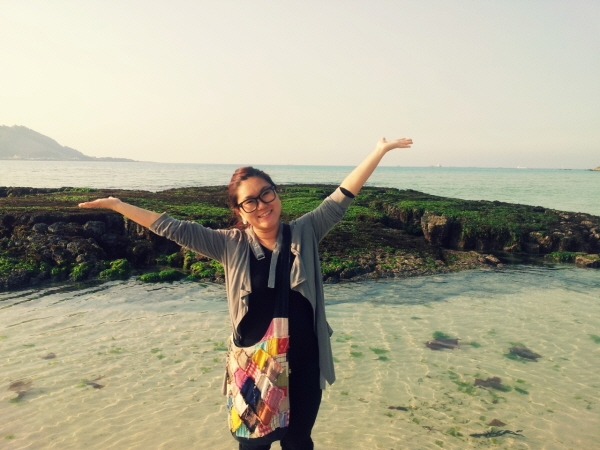
Kim Ji-Eun (Esther) is a mission intern of Global Ministries of the United Methodist Church. In the same group of UMC youth interns as Nazar, who served in the NCCK office for 1 1/2 years and now is in Ukraine, Esther just finished 1 1/2 years in Zambia and is serving the second part of her mission service, the ‘domestic placement’, assigned to the NCCK Department of Reconciliation and Unification. She says, “I am so excited to work with this department because this issue is one of the significant and important issues in Korea (actually not only a Korean issue but a global issue). I hope that I can contribute and commit myself in this issue and through the time that we work together we can grow and learn from one another. Praise the Lord”
I joined the “4.3 and visiting Gangjeong village in Jeju” trip with EYCK. How beautiful Jeju Island is in this season! We were amazed at the creations of God.
On the 3rd, we went to ‘Jeju April 3rd Peace Park’ to attend a memorial ceremony for the victims of the April 3rd Massacre that took place in Jeju in 1948. This was a somber memorial in which we prayed for victims and their family. This tragedy shows us what can happen in a powerless country. It is never easy to believe and understand this tragic affair happening in this beautiful, peaceful and isolated Island.
After the park and memorial hall we moved to Gangjeong Village to have worship. The Gangjeong village seemed very lonely and cold. I was very shocked that the naval base in Gangjeong has been already built up much more than I expected. We had worship together in front of gate. We shared about this issue, our minds and thought about this. Also we’ve got a chance to listen to man who has been working for Gangjeong for several years. I wondered at the way of Government to negotiate with local people. My question is what real peace and justice is? What the peace and justice of God and Jesus is? What real security is? How our powerless local people can communicate with powerful government and world? Somehow I felt anger and grief.
After we had worship, we took a tour of Gangjeong village and I realized it is amazingly beautiful and peaceful. I even didn’t know such a wonderful place existed in Korea like this! It was a meaningful and helpful opportunity to think about what real justice and peace is and what S. Korea’s future task is to make a peaceful country, to make a powerful (in good way) country, to make a non violence and non discrimination country. I would like to invite you to think about it with me!
|