|
TRAVEL IN THE PEACE TRAIN
All religions and cultures have stories of journeys (the Exodus, slaves from Egypt following Moses to freedom; the Magi following a star and the vision of what it meant). Journey is a metaphor for our lives.
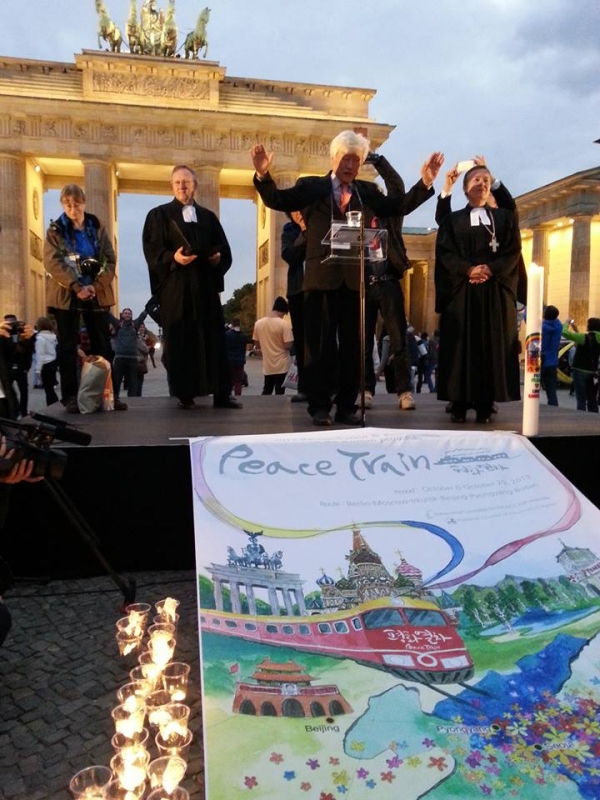 The Peace Train journey was a vision which developed in Korea with the plans for WCC in Korea. What a chance to show the deep desire for peace and reunification by bringing peace-loving people on this metaphor-journey from Berlin to Busan, across the DMZ. The journey started in Berlin. Germany shared the experience of an Allied- imposed division after World War II, and lived through the Cold War in this divided state. Germany experienced reunification, and so the train carried this hope and possibility to Korea. The program in Berlin was most significant to those who took part; as they learned of the pain and trauma of division on the people of the country, and their struggles for reunification.
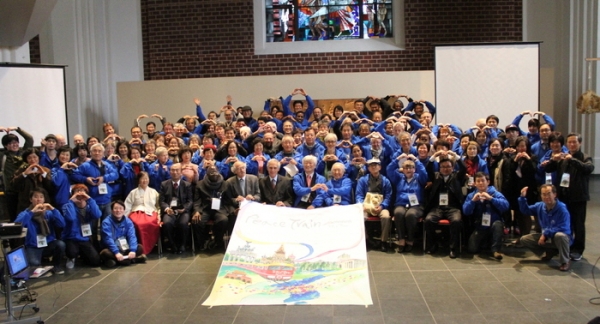 130 people witnessed for peace riding the Train. Half of them were Koreans, proclaiming passionately their longing for reunification. The others, from 14 countries, as far away as Brazil, African nations of Malawi, Nigeria and Ethiopia, from India, Indonesia, New Zealand and Australia, North America, Europe and Ukraine, formed a community in the vision of peace. The metaphor Rebecca Froese, going to Busan to be a steward at the Assembly, used to describe the shared trip was ‘tent-expanding’.
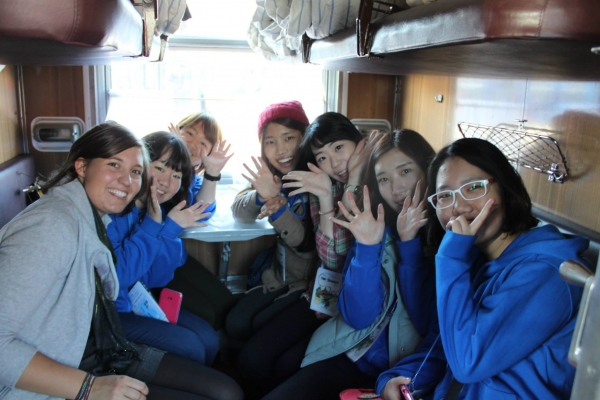 She said, “We were like the nomads traveling around the country with no more than we could carry. We all came from different backgrounds, from different congregations and confessions, and everyone arrived with their own ‘confessional’ tent. God called us to extend our tent and to invite people to be one in spirit. Day by day, the poles were reinforced and the cords extended through conversation, worship and even simple picture-taking.”
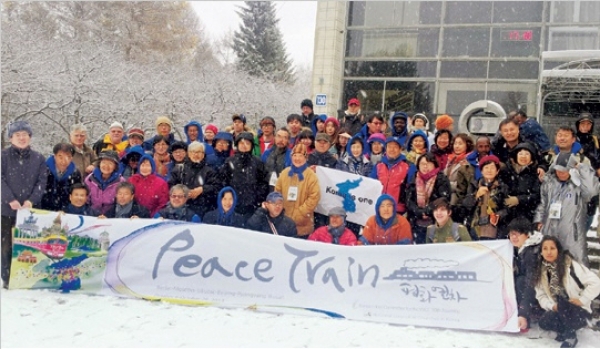 From Berlin, the train traveled through Russia and China, the close neighbours to Korea, whose involvement has been for both good and ill over the years, but now whose cooperation as members of the ‘6-Party talk nations’ will be necessary for negotiations between North and South Korea as we seek treaty and then reunification.
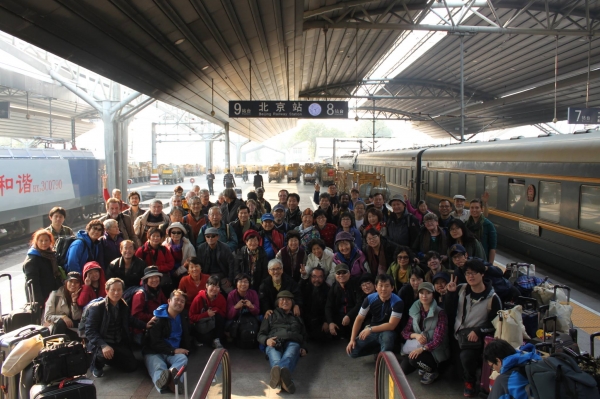 The train, finally, was unable to go to Pyongyang; the passengers cried out their longing and asserted their vision for the future from Dandong, China, across the Yalu River, the border between China and North Korea. They changed to a ferry which took them across the West Sea to Incheon/Seoul, and then made the final leg of the trip by train to Busan, where they were warmly welcomed by enthusiastic greeters at Busan Station, to proclaim the good news of peace to WCC.
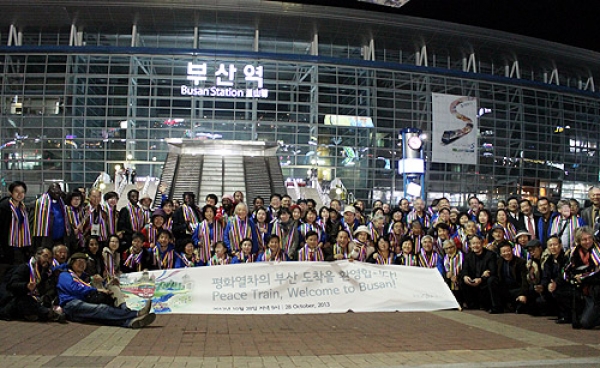 During the 10 days of the Assembly, the Peace Train participants hosted a Madang display, where many people, delegates, observers, participants, stewards and others continued to hear their story and share their vision.
Hearty thanks are given to the staff and committee who worked so hard and for so long to conclude this program with such success; so many, but especially Interns Nazar (sent by United Methodist Church, but originally from Ukraine) and Daniel (sent by EKD of Germany), Reunification staff Lee Chang Hwie and Peace Together 2013 staff Hwang Bo Hyun. Also sincere thanks to the church bodies in Germany who hosted the Berlin segment, and the Russian Orthodox Church who hosted the Moscow segment. (Soon after the conclusion of WCC, Daniel’s internship finished and he returned to Germany. We miss him. Best wishes, Daniel!)
 |
KNCC
TRAVEL IN THE PEACE TRAIN
입력 : 2013-12-23 09:19:46 수정 :