| MOSCOW VISIT
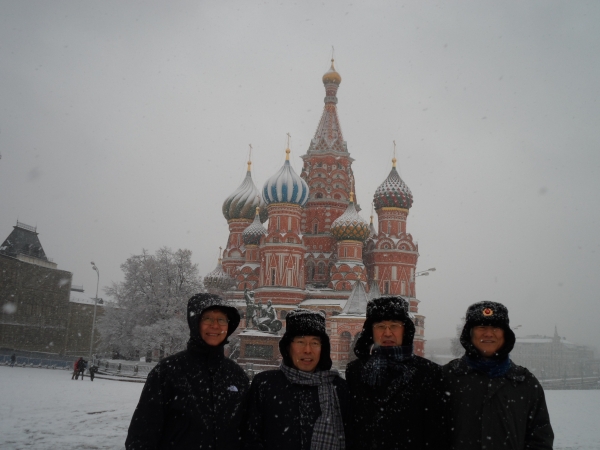
In February a team from the NCCK paid a visit to Moscow, where a couple
of meetings with Russian Orthodox Church officials were held. The visit
was an opportunity to strengthen friendly relationships and continue
the inter-Christian and Russian-Korean dialogue.
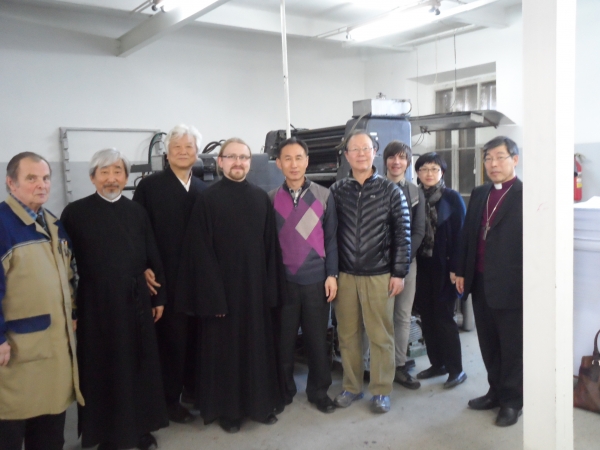
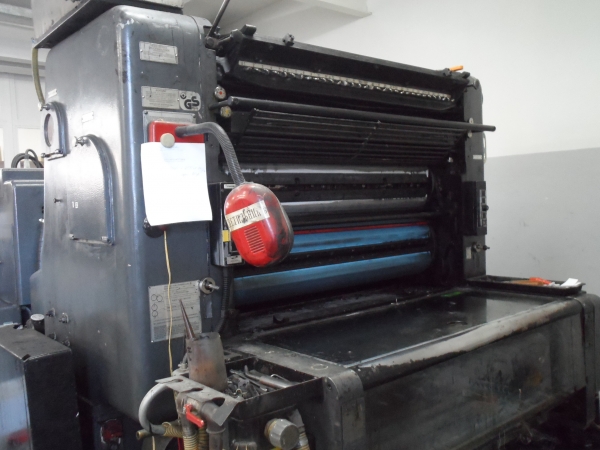
 During the trip the delegation had an opportunity to visit Sergiev Posad (Trinity
Lavra of St. Sergius), where 10 years ago the NCCK donated equipment for
the publishing house.
The local monks gave a tour, told about history of the Lavra, and even let the members
climb the bell tower (which is not open for everyone), where we could see the biggest 74-
ton bell.
The team met with nuns at a women’s monastery, where a special center for disabled
children is located, and visited the facilities and rooms with special equipment. The center
also specializes in providing help for young mothers, where they can find shelter and have
all the medical help they require.
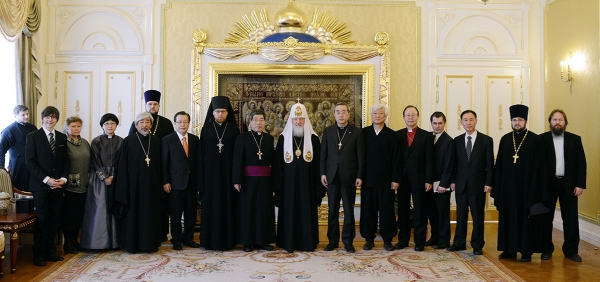
The delegation also met with the Patriarch of the Russian Orthodox, Kirill I. His Excellency
highlighted the long and good friendship between the ROC and Christians in South Korea, in
particularly in the cooperation in Tozanso process under the aegis of WCC. The Patriarch
underlined the importance of peaceful unification of Korea which is why the Peace Train
project and the WCC 10th General Assembly in Busan were considered as good steps and
opportunities towards reconciliation. The head of the Orthodox Church expressed his
support of both events and wished good organization.
The working group met with Margarita Nelyubova, the main Peace Train coordinator in
Moscow.
Many details were discussed, the most important being the facilitation of the Peace Train
Project to the Russian government. Russian side agreed to send its representatives to
certain governmental bodies to present Peace Train. The ROC also expressed support with a
simplified visa procedure and agreed to contact the Irkutsk diocese to elicit its cooperation
and peace Madang.
 Following is part of Patriarch Kirill’s address:
I would like to say that Russia and Korea are connected by very cordial and long
relationships. It is very important for us that Orthodoxy in Korea and the birth of Orthodox
Church in Korea are connected with the missionary efforts of the Russian Orthodox Church.
In Seoul, as well as in other cities of Korea, there are many Russian Orthodox temples, which
are visited not only by Russians but also Korean Orthodox Christians. Because of ‘political’
reasons, the presence of the Russian Orthodox Church in the Republic of Korea after WWII
became impossible.
There are many Orthodox believers in Seoul, who are citizens of Russia and other countries,
where the Russian Orthodox Church is serving. Since 2000 the care about these Orthodox
people as well as about Korean Orthodox Christians was done by Father Superior Feofan
Kim, who became a bishop in 2011 and now is serving in the Republic of Tyva (Russian
Federation). Father Feofan Kim was serving in the temple which belongs to the
Constantinople Patriarch jurisdiction in Seoul, under the supervision of Constantinople
Bishop.
In 2006 I personally (at that time still as a metropolitan) blessed the Trinity Church in
Pyongyang, North Korea. We continue to help Orthodox Christians in Pyongyang and
support that temple, where regular masses take place in Slavonic and Korean languages.
Russian Orthodox Church and South Korean Churches are connected by many years of good
cooperation. Our Church was an active participant of the movement for Unification of North
and South Korea, the so-called Tozanso Process, which started in 1984 under the aegis of the
World Council of Churches. During the years of the Cold War, where direct communication
between the USSR and South Korea was difficult, Christians from Soviet Union and Christians
from South Korea were meeting each other at the WCC events. In a time of very negative
political context (there were no diplomatic relationships; there was a lot of mutual negative
propaganda) we still had good and sincere relationships with the representatives of the
Korean Churches. And this brotherly cooperation, above strong and difficult political conflicts
and borders, I think, left only good memories in the hearts of those who participated in all
those events.
I personally belong to those people, who took part in building those relationships. And with
the big gratitude to God I recall all those good memories about South Korean Christians.
In the 90s when the political situation changed, and Russia became open to the world, our
connections went on rather successfully. The 90s were the years of deep economic, political
and social crisis in Russia, connected with the change of the political system, new system of
governing the economy, and our church was in a very tough financial situation. But
nevertheless, those years became new doors of possibilities for missions and evangelization.
In particular we got the opportunities for a vast publishing activity. And I would like to
mention once again a kind move of South Korean Christians, who helped us in that time with
equipment for the publishing house in the Trinity Lavra of St. Sergius. We started to print the
Bible, the books of Old and New Testament and other books, which were very important for
our people in that time and had an important missionary value.
 We continue our dialogue with South Korea on the Church level through the frame “Russia –
Republic of Korea”. This dialogue facilities the development of diplomatic, juridical and
humanitarian contacts between our countries. We have supported in the past and we will
continue to support the efforts of Korean Christians for Reconciliation of Korea. We know
that the dialogue between the North and South is not an easy one, but we are sure, that
with God’s help all these obstacles can be overcome. History teaches us that sometimes
miracles happen instantly. That happened with the fall of the Berlin Wall and the
restoration of contacts between East and West, including full-fledged contacts among
Christians.
Concerning this, I would like to say that your project “Peace Train”, which is supposed to be
carried out before the WCC 10th Assembly in Busan is one more contribution to
reconciliation between North and South and reconciliation between Korean people. Partially
the route of the train will go through Russian Federation, and I hope that together with the
department of foreign affairs of the Russian Orthodox Church, those who are responsible for
this project will be able to prepare some mutual valuable events.
 |
KNCC
Moscow Visit
입력 : 2013-04-08 09:55:09 수정 :